



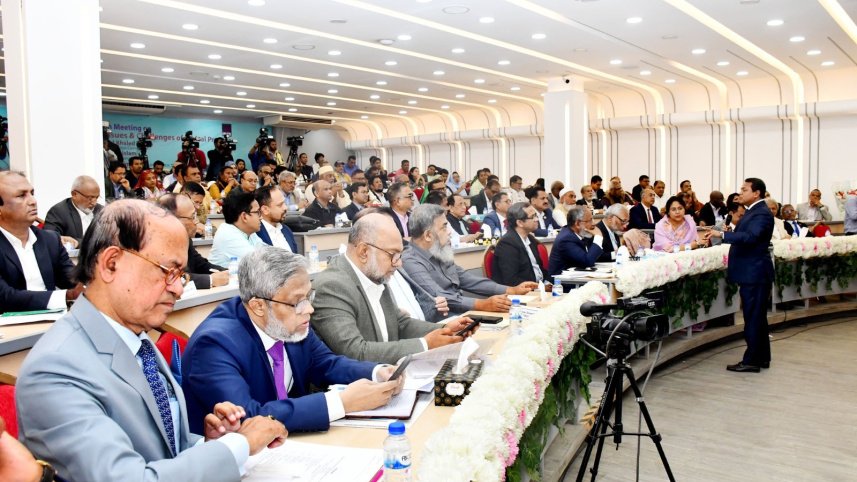
Ethical business practices in Bangladesh are becoming increasingly difficult due to rising unofficial payments, delays, and excessive discretion in public services, experts said at a roundtable in Dhaka on Wednesday.
Khondaker Golam Moazzem, research director at the Centre for Policy Dialogue (CPD), said partial digitalisation has failed to reduce corruption, as manual processes still allow repeated physical interaction with offices. He stressed the need for full end-to-end digitalisation and business process reengineering to cut delays, duplication, and informal costs.
Speaking at the event jointly organised by FBCCI and IBFB, Moazzem noted that businesses are facing a dual transition — a change in political leadership and Bangladesh’s upcoming graduation from LDC status — requiring stronger engagement with policymakers.
Foreign Secretary Nazrul Islam said institutional reform must produce visible results, warning that reforms without public benefits cannot succeed. He identified manual processes as a major source of corruption and said fully online services could significantly improve governance and investment confidence.
Anti-Corruption Commission Secretary Mohammad Khaled Rahim said corruption often stems from systemic weaknesses. He urged businesses to file specific complaints, assuring protection of anonymity.
Business leaders criticised regulatory complexity, customs inefficiencies, and excessive discretionary powers, calling for genuine reforms to improve the business climate and promote ethical governance.