



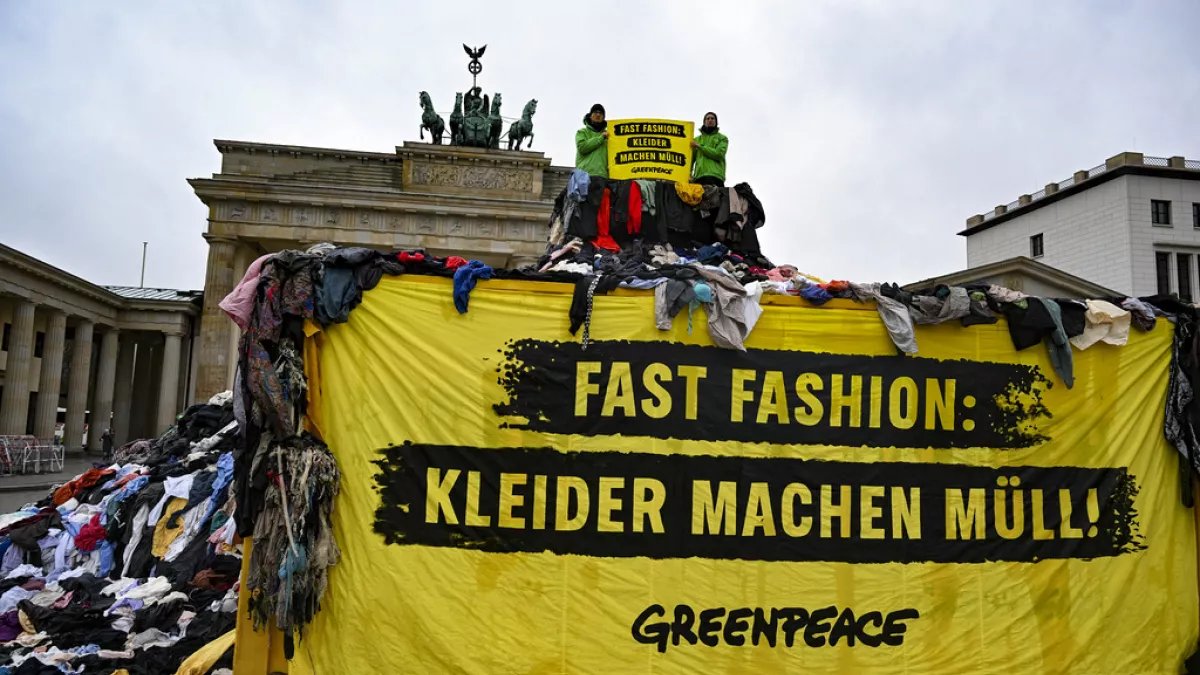
Europe’s plan to build a circular textile economy is facing major financial and structural challenges, with industry estimates indicating that up to €11 billion will be needed to scale textile recycling systems.
A recent report by Boston Consulting Group and ReHubs highlights the significant investment required to develop infrastructure capable of handling rising textile waste, largely driven by fast fashion.
Europe generates over 15 million tonnes of textile waste each year, mostly from used clothing. However, less than 1% is currently recycled into new textiles, revealing a major gap between sustainability goals and actual recycling capacity.
The challenge is expected to intensify as clothing consumption continues to grow. Fast fashion models, focused on low-cost and high-volume production, are increasing waste while consumer behavior remains slow to change.
Recycling economics also remain difficult. The report estimates that scaling textile-to-textile recycling will require €8–11 billion in capital investment, along with up to €6.5 billion in annual operating costs. Recycled fibres currently struggle to compete with cheaper virgin materials due to higher processing costs.
To become economically viable, Europe must process around 2.7 million tonnes of textiles annually by 2035. However, current infrastructure—especially sorting, collection, and recycling facilities—is not yet equipped to meet this target.
Technical challenges further complicate the process. Many garments are made from blended materials like polyester and cotton, along with accessories such as zippers and coatings, making recycling more complex and costly.
Policy changes are adding urgency. Under the EU’s revised Waste Framework Directive, brands will be required to fund textile collection and recycling through extended producer responsibility (EPR) schemes. Additionally, mandatory textile waste collection across member states will begin in 2025.
While these measures aim to boost recycling, industry experts warn that without rapid infrastructure expansion, increased collection could lead to more waste being exported, incinerated, or landfilled.
Experts also stress that recycling alone is not enough. Reducing overproduction, improving product design, and extending garment lifecycles are critical to achieving a sustainable textile system.
Despite these challenges, Europe’s textile waste presents a major economic opportunity. With the right policies and investments, it could support a multi-billion-euro recycling industry. However, success will depend on strong coordination across the entire value chain.