



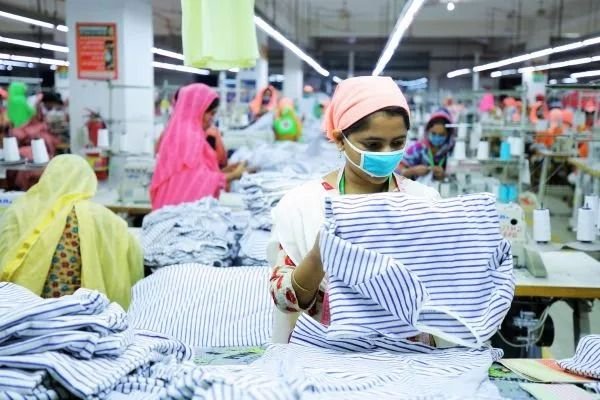
Bangladesh’s readymade garment (RMG) sector is under growing strain, with nearly 400 factories shutting down over the past three years amid rising operational costs and an increasingly challenging business environment, according to the Bangladesh Garment Manufacturers and Exporters Association (BGMEA).
In a statement submitted during a pre-budget discussion at the National Board of Revenue (NBR), industry leaders warned that many more factories remain financially vulnerable, raising concerns about the sector’s near-term stability.
The apparel sector—responsible for more than 80% of the country’s export earnings—has been grappling with a combination of structural and external pressures. These include escalating energy costs, higher logistics expenses, tightening financing conditions, and persistent infrastructure limitations.
BGMEA President Mahmud Hasan Khan and other industry representatives highlighted that rising costs of doing business, coupled with the absence of a sufficiently business-friendly environment, have significantly contributed to the slowdown.
Private sector stakeholders also raised concerns over institutional inefficiencies, alleging widespread corruption and administrative harassment within tax and customs offices. Industry leaders urged authorities to address these issues, stating that improved governance could restore confidence and ease operational burdens.
“We are ready to comply with tax obligations, but irregularities and harassment must be eliminated,” several business leaders emphasized during the discussion.
Export performance has also shown signs of weakness, with garment shipments declining over the past eight months compared to the previous period, according to data from the Export Promotion Bureau.
To address the challenges, industry bodies put forward several policy recommendations. These include reducing the existing 1% source tax on exports to 0.65%, removing taxes on cash incentives, lowering import duties on machinery—particularly for renewable energy solutions—and easing tariffs on raw materials.
The Bangladesh Textile Mills Association (BTMA) also proposed restoring the corporate tax rate for the textile sector to 15% and reducing value-added tax (VAT) on yarn sales in the domestic market.
Additionally, stakeholders called for measures to simplify business procedures, including tariff exemptions on sample imports and improved customs clearance processes.
Responding to the concerns, NBR Chairman Md Abdur Rahman Khan assured that the government is considering steps to enhance ease of doing business while expanding the tax base.
He also announced plans to introduce a QR code-based system for packaged goods to curb VAT evasion and improve compliance, alongside the potential reintroduction of a simplified package VAT system for small businesses.
Industry insiders believe that without immediate policy support and structural reforms, the sector could face further consolidation, potentially impacting employment and export competitiveness.
Despite the challenges, stakeholders remain hopeful that targeted reforms and stronger public-private coordination can help stabilise the industry and sustain Bangladesh’s position in the global apparel market.