



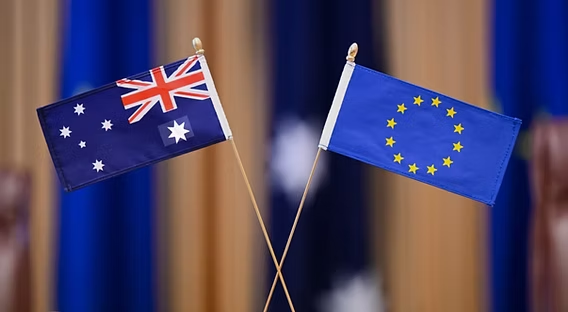
The European Union and Australia signed a strategic Free Trade Agreement (FTA) on 24 March, concluding nearly eight years of negotiations. The agreement aims to strengthen economic ties, expand market access, and enhance cooperation in key sectors, including critical minerals.
Under the deal, tariffs on more than 99% of goods traded between the two partners will be eliminated. Analysts estimate the agreement could generate significant economic benefits, including approximately €1 billion in annual savings for European exporters and around A$10 billion (US$7 billion) in annual gains for Australia.
Australian agriculture is expected to benefit from expanded tariff-free quotas for products such as beef, sheep meat, and dairy, increasing export potential and farm revenues. However, European farmers may face stronger competition from Australian imports, raising concerns among some industry groups.
The textile and apparel sector is also set to gain. European exporters will have improved access to the Australian market for high-value textiles, apparel, and technical fabrics. At the same time, Australian producers will benefit from reduced tariffs when exporting cotton, wool, and ready-made garments to Europe. The agreement is expected to encourage cross-border investment and joint ventures, particularly in sustainable and innovative textile production.
A key feature of the FTA is cooperation on critical minerals such as lithium, rare earth elements, and tungsten—materials essential for clean energy technologies and advanced manufacturing. The deal supports European investment in Australia’s mining sector and strengthens supply chain security.
Beyond goods trade, the agreement enhances cooperation in services, investment, research, and security. It also opens the possibility for Australia to participate in the EU’s Horizon Europe research programme.
Despite the benefits, some agricultural and industry stakeholders have raised concerns regarding quota distribution, labeling standards, and increased competition, particularly in sectors such as wine, geographically protected products, and textiles.
The agreement now requires ratification by both the European and Australian Parliaments. Implementation is expected to be phased over the coming years, with gradual adjustments to tariffs, quotas, and sector-specific regulations.