



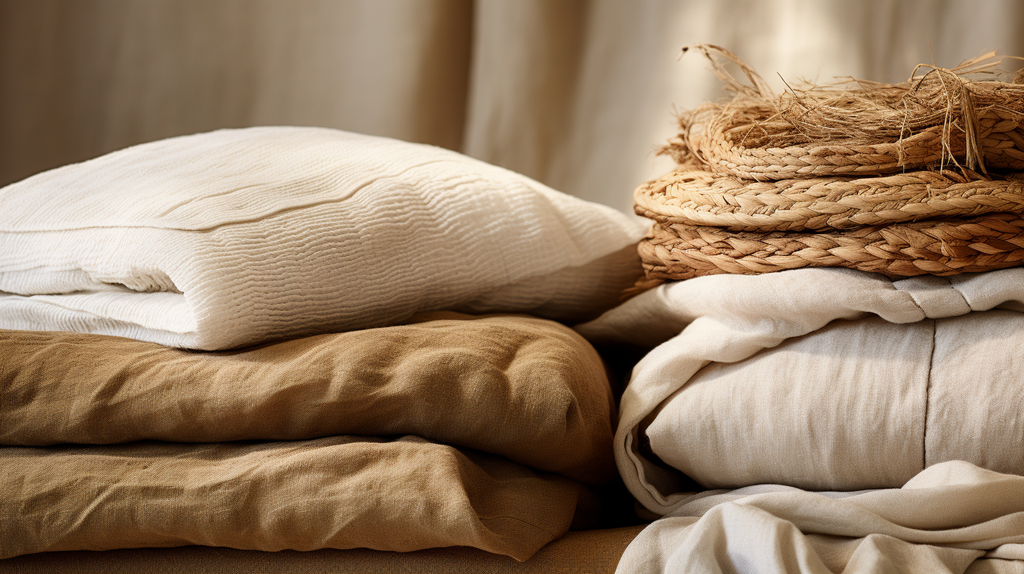
Flax is one of the oldest natural fibers used by humankind, with archaeological evidence dating back over 30,000 years. Ancient Egyptians used linen for mummification and royal garments due to its purity and strength. Over centuries, linen production spread across Europe, especially in Ireland, Belgium, and France. Though cotton later dominated global markets, linen retained a niche reputation for luxury and durability.
Fiber Morphology
Flax fibers are obtained from the stem of the Linum usitatissimum plant. Each fiber bundle consists of individual cellulose-rich cells, long and smooth with polygonal cross-sections. The fiber length ranges from 25–150 mm, and its diameter is around 12–16 microns. The presence of nodes or knee joints makes linen slightly irregular in texture, giving it a natural luster.
Physical & Mechanical Properties
- Tensile Strength: Compared to cotton, linen shows greater tensile strength, making it highly durable.
- Moisture Absorption: It can absorb up to 12% of its weight in moisture without feeling damp, providing excellent comfort in hot climates.
- Thermal Conductivity: Linen feels cool to touch, allowing better air circulation.
- Elasticity: It has low elasticity, which is why it wrinkles easily.
- Luster: The natural sheen adds to its aesthetic appeal.
Linen Processing
Linen manufacturing begins with retting, where the flax stems are soaked to separate fiber from woody matter. Then comes scutching, which removes the woody core, followed by hackling to comb and align fibers. The fibers are then spun into yarns and woven into fabric. Modern mills now use semi-automated and water-efficient processes to ensure smoother, finer yarns suitable for apparel-grade linen.
Global Linen Market Revival
In recent years, there has been a remarkable revival in linen demand, driven by consumers’ shift toward natural and sustainable fibers. Europe remains a major flax-producing region, while countries like China and India are emerging as large-scale processors. The global linen market is expected to grow steadily due to its eco-friendly appeal and luxury branding.
Premium Apparel & Home Textiles
Linen is now a staple in premium fashion collections, from summer dresses and shirts to tailored suits. Its breathability and elegance make it a favorite among designers like Armani and Ralph Lauren. In home textiles, linen is widely used for bed linens, curtains, and upholstery, valued for its aesthetic charm and long lifespan.
Sustainability Edge
Linen’s sustainability comes from its low environmental footprint:
- It requires minimal pesticides and fertilizers.
- Rain-fed cultivation reduces water usage.
- Almost every part of the flax plant is utilized — making it a zero-waste crop.
Moreover, linen is biodegradable and recyclable, aligning perfectly with the global move toward sustainable fashion.
Linen’s journey from ancient civilizations to modern luxury textiles shows how timeless this fiber truly is. Its exceptional strength, comfort, and sustainability make it a perfect choice for today’s conscious consumers. As fashion and textile industries embrace greener alternatives, linen is once again weaving its legacy into the fabric of modern life.
Written by: Rezoana Yeasmin