



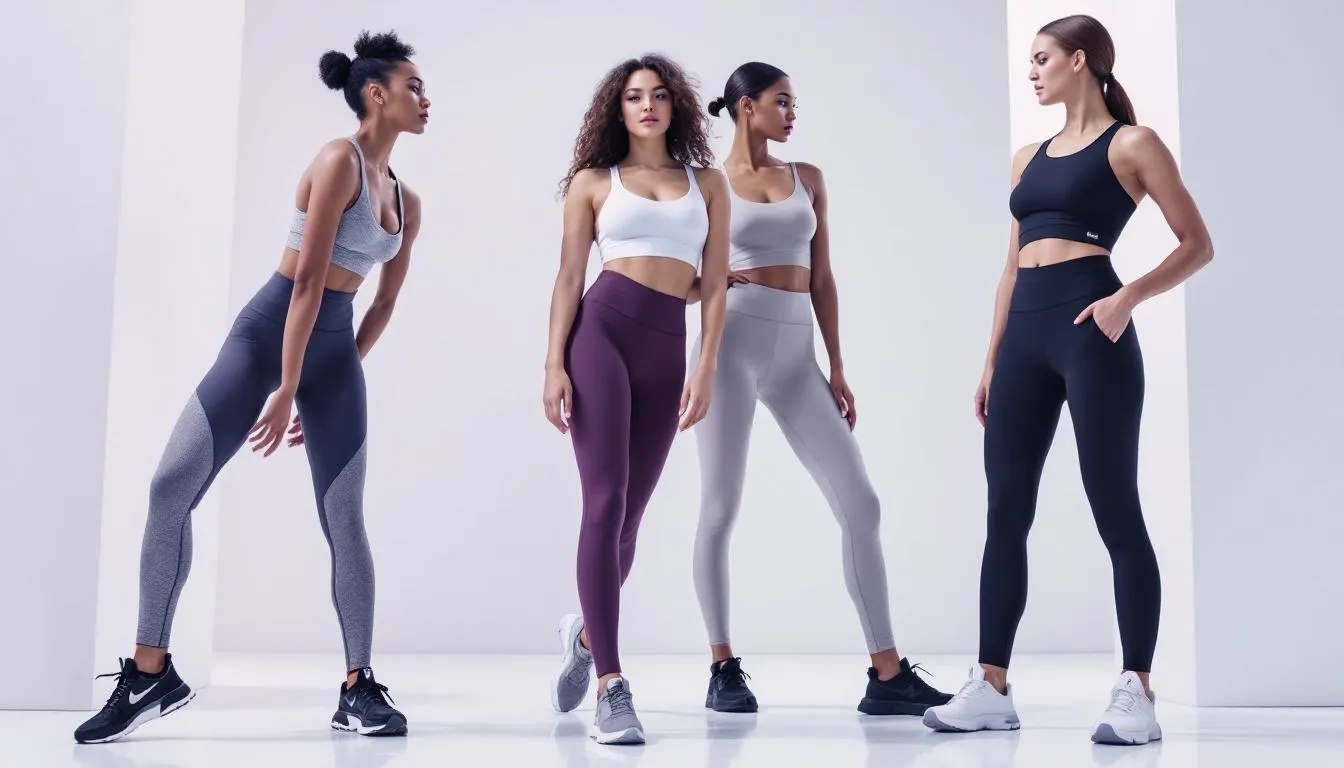
Few inventions have altered the landscape of fashion and functionality as largely as Spandex. Known as “Elastane” in most of the world and “Spandex” (an anagram of “expands”) primarily in North America, this synthetic fiber is the unsung hero of the modern wardrobe. Before its invention, clothing was rigid; if you wanted a form-fitting garment, you relied on rubber, which was heavy, degraded quickly, and uncomfortable against the skin.
The revolution began in 1958 at the DuPont laboratory, where chemist Joseph Shivers invented a fiber that could stretch up to 500% of its original length and snap back into shape without breaking. Initially marketed under the brand name Lycra, this “miracle fiber” liberated fashion from the constraints of rigid textiles. Today, it is ubiquitous, found in everything from high-performance Olympic gear to the skinny jeans in our daily rotation.
Chemistry & Elastic Properties
To understand why spandex stretches, you have to look at it on a molecular level. Spandex is a long-chain synthetic polymer known as a segmented polyurethane-polyurea copolymer.
The magic lies in its unique “block copolymer” structure, which consists of two alternating types of segments:
- Soft Segments: These are long, disordered, flexible chains that allow the fiber to elongate. They are essentially the “springs” of the molecule.
- Hard Segments: These are rigid, urethane-based sections that bond with each other to form strong connection points. They act as “anchors” or “knots” that prevent the fiber from stretching indefinitely and breaking.
When you pull a pair of yoga pants, the soft segments uncoil and straighten out. When you release the tension, the hard segments use their intermolecular force to snap the soft segments back to their original, coiled state. This specific chemistry makes spandex lighter, more durable, and significantly stronger than the natural rubber it replaced.
Production Process
Manufacturing spandex is a complex chemical engineering feat. While there are four methods to produce it—melt extrusion, reaction spinning, solution dry spinning, and solution wet spinning—Solution Dry Spinning is used to produce over 90% of the world’s spandex supply due to its efficiency and quality.
The process generally follows these steps:
- Pre-polymerization: A glycol is reacted with a diisocyanate monomer to create a prepolymer.
- Chain Extension: This prepolymer is reacted with diamine, extending the polymer chain and achieving the desired viscosity.
- Spinning: The resulting solution is pumped through a spinneret (a device like a showerhead with microscopic holes) into a cylindrical spinning cell.
- Solvent Evaporation: As the fibers exit the spinneret, they encounter a stream of heated gas (usually nitrogen) that evaporates the solvent, turning the liquid jets into solid fibers.
- Twisting and Winding: Individual fibers are often bundled (twisted) together to form the final thread thickness required, then treated with a finishing agent (like magnesium stearate) to prevent sticking before being wound onto spools.
Applications in Knitwear and Sportswear
Spandex is rarely used alone; it is almost always blended with other fibers. Its ability to add “recovery”—the capacity to return to original shape—makes it indispensable in knitwear and sportswear.
- Sportswear & Activewear: This is the native habitat of elastane. Compression garments rely on high percentages of spandex (often 15-20%) to support muscles, reduce fatigue, and improve aerodynamics. In swimwear, the fiber must be specially treated to resist degradation from chlorine and salt water.
- Knitwear: In the world of casual clothing, elastane prevents “bagging.” Knees in sweatpants or elbows in sweaters typically sag after wear; a small addition of elastane ensures the fabric retains its silhouette.
Comfort & Fit Innovations
The definition of “comfort” in apparel has shifted from “loose and baggy” to “moves with you.” Innovations in elastane technology have focused on “soft stretch”—providing elongation without the feeling of constriction.
One major innovation is multi-directional stretch. Early fabrics only stretched in one direction (usually horizontal/weft). Modern “four-way stretch” fabrics allow movement in all directions, accommodating complex biomechanical movements during high-intensity sports.
Another leap forward is chlorine-resistant and heat-resistant elastane. Standard spandex breaks down under heat (making it hard to dye or mold) and chemical exposure. Newer variants, such as Lycra Xtra Life, utilize antioxidants and stabilizers to prolong the garment’s lifespan, solving the common problem of swimsuits losing their shape after a single season.
Blending Techniques
Spandex is a “filament” fiber, meaning it is a long, continuous strand. To be useful, it must be integrated with “spun” fibers like cotton, wool, or polyester.
- Core-Spun Yarn: This is the most common technique for denim and high-quality fabrics. The spandex filament acts as the central core, and the companion fiber (like cotton) is spun around it. This means the wearer only feels the soft cotton against their skin, not the synthetic rubbery core, while still getting the benefit of the stretch.
- Plating: Used in knitting, this technique feeds the spandex and the main yarn into the knitting machine simultaneously but in a specific relationship. The spandex stays on the back of the fabric (inside), while the main yarn stays on the face. This is often seen in jersey knits.
- Covered Yarn: The spandex is wrapped spirally with another filament (like nylon). This is frequent in hosiery and tights to provide a smoother texture and better durability.
Market Demand
The global market for spandex is driven by the “athleisure” boom—the cultural shift where gym clothes became acceptable everyday wear. Consumers now demand functionality in all their clothes; they want business suits that stretch like tracksuits and denim that feels like leggings.
However, the market faces a new challenge: Sustainability. Traditional spandex is petroleum-based and notoriously difficult to recycle. Because it is almost always blended with other fibers, it complicates the recycling process for those host fibers (e.g., it is hard to recycle the cotton in a jean if it is fused with elastane).
In response, the market is seeing a surge in demand for bio-based elastane (made from renewable sources like industrial corn) and recyclable elastane technologies that allow the stretch fibers to be separated from the main fabric at the garment’s end-of-life.
Conclusion
From the laboratories of the 1950s to the high-tech looms of today, Spandex/Elastane has proven to be more than just a synthetic additive; it is the backbone of modern apparel comfort. It allowed fashion to become aerodynamic, supportive, and inclusive of different body shapes. As the industry moves toward the future, the focus will likely shift from “how much can it stretch” to “how sustainably can it stretch,” ensuring that this flexible fiber continues to shape our world without weighing it down.
Written by: Md. Shihab Hossain