



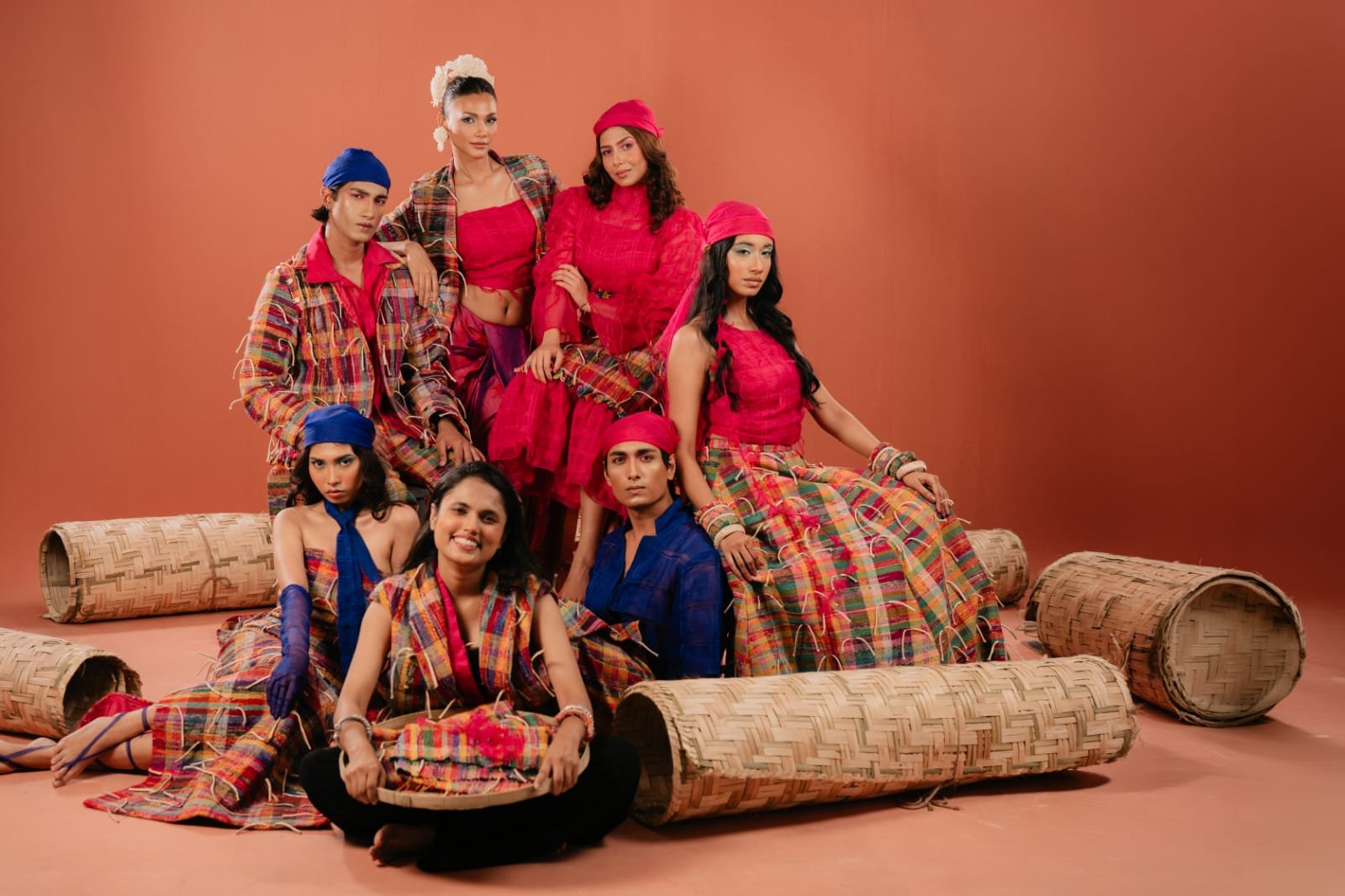
In an era where fast fashion dominates consumer culture and textile waste continues to rise, Bangladeshi fashion designer and visual storyteller Raisha Amin Shaily presents a compelling alternative—one that intertwines heritage, sustainability, and contemporary design. Her collection, “Echoes in Loom,” transforms old, worn heirloom sarees passed down by her loved ones into wearable art, drawing inspiration from Rangpur’s Shataranji, one of Bangladesh’s prestigious Geographical Indication (GI) products.In an era where fast fashion dominates consumer culture and textile waste continues to rise, Bangladeshi fashion designer and visual storyteller Raisha Amin Shaily presents a compelling alternative—one that intertwines heritage, sustainability, and contemporary design. Her collection, “Echoes in Loom,” transforms discarded textiles into wearable art, drawing inspiration from Rangpur’s Shataranji, one of Bangladesh’s prestigious Geographical Indication (GI) products.
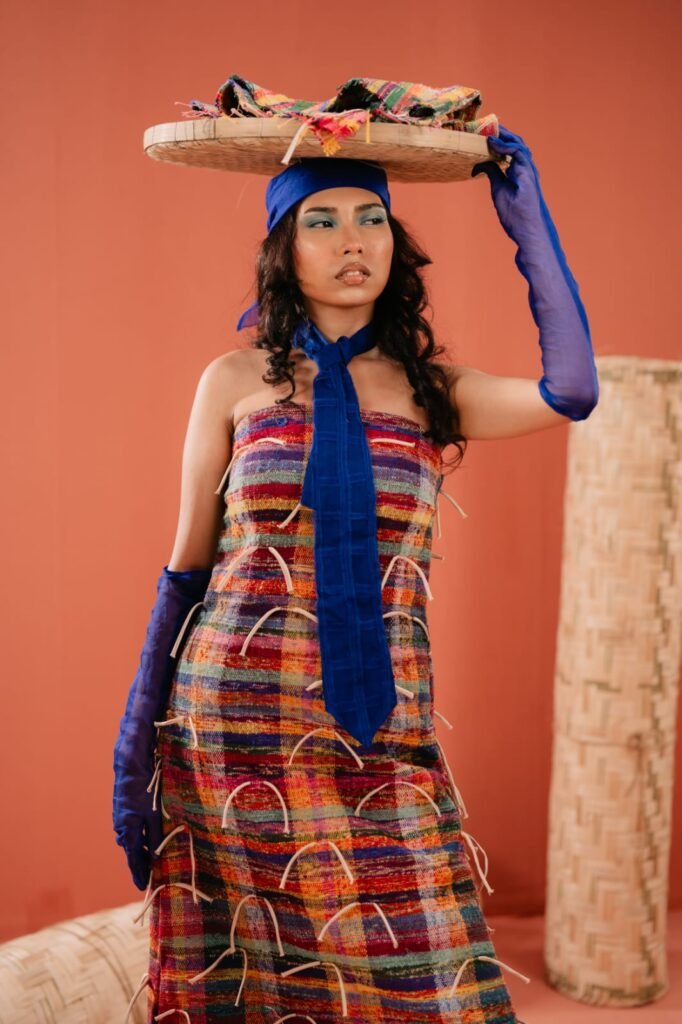
More than a fashion collection, Echoes in Loom is a reflection on memory, craftsmanship, and conscious consumption. By reviving traditional weaving techniques through recycled materials, Shaily demonstrates how fashion can preserve cultural identity while addressing today’s environmental challenges.
Weaving Heritage into Contemporary Fashion
At the heart of the collection lies the centuries-old craft of Shataranji, renowned for its intricate handwoven structure, geometric compositions, and timeless motifs. Traditionally woven by skilled artisans in Rangpur, Shataranji has long represented Bangladesh’s rich textile heritage.
Rather than reproducing the traditional rug in its original form, Shaily reinterprets its visual language through contemporary silhouettes and handcrafted textiles. Her approach creates a dialogue between past and present, allowing a historic craft to find renewed relevance in modern fashion.
The collection reflects how traditional weaving can transcend its conventional function and evolve into a sophisticated medium for sustainable couture.
From Forgotten Garments to Handwoven Textiles
One of the defining aspects of Echoes in Loom is its commitment to textile upcycling.
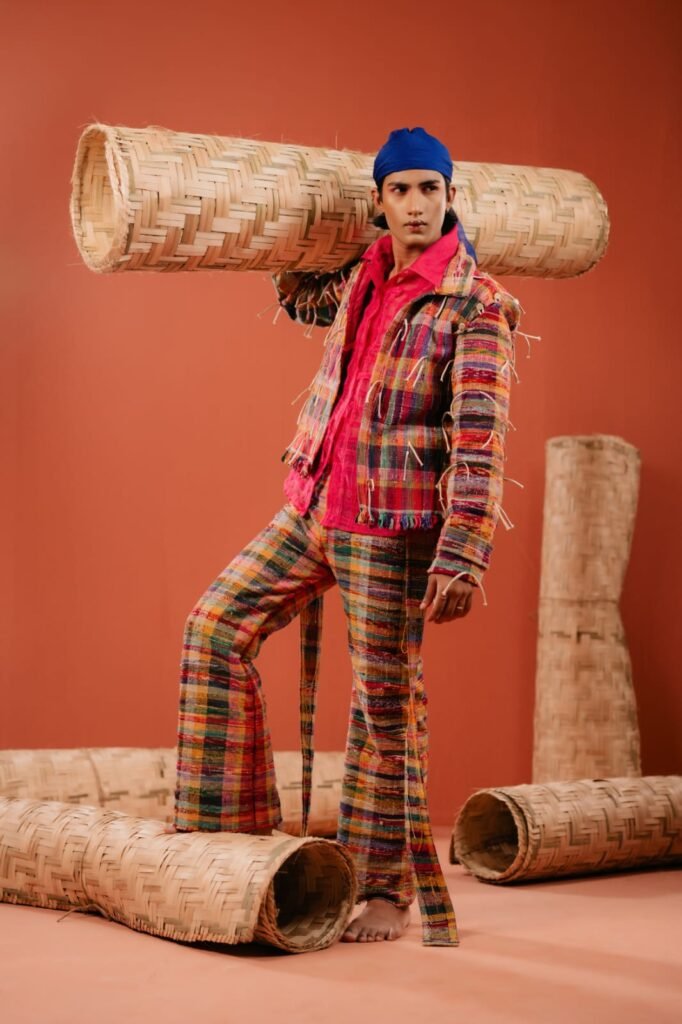
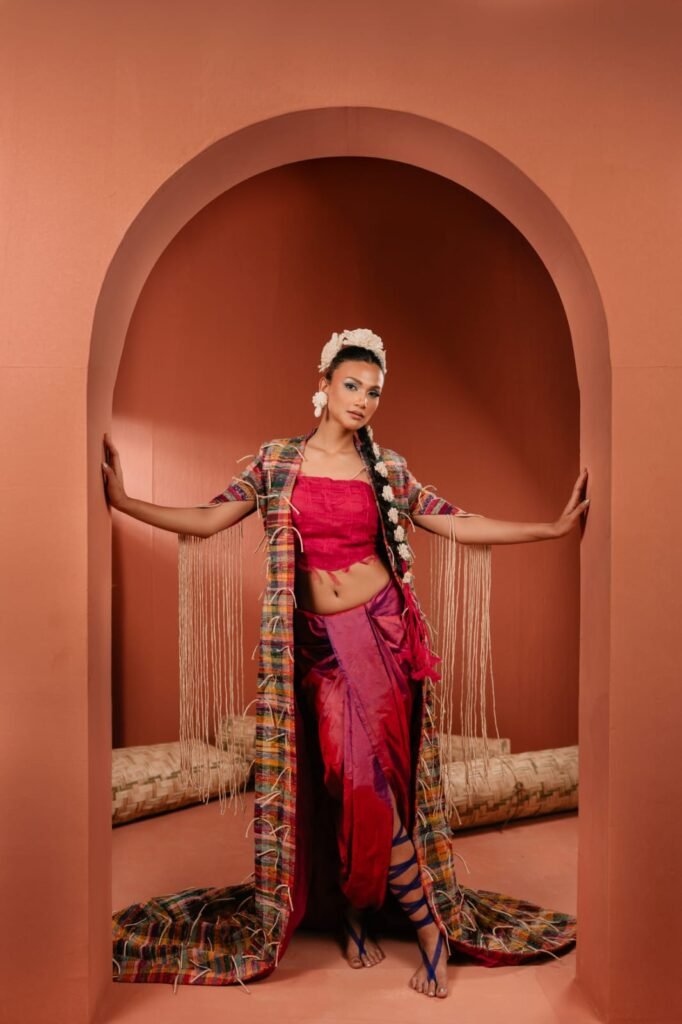
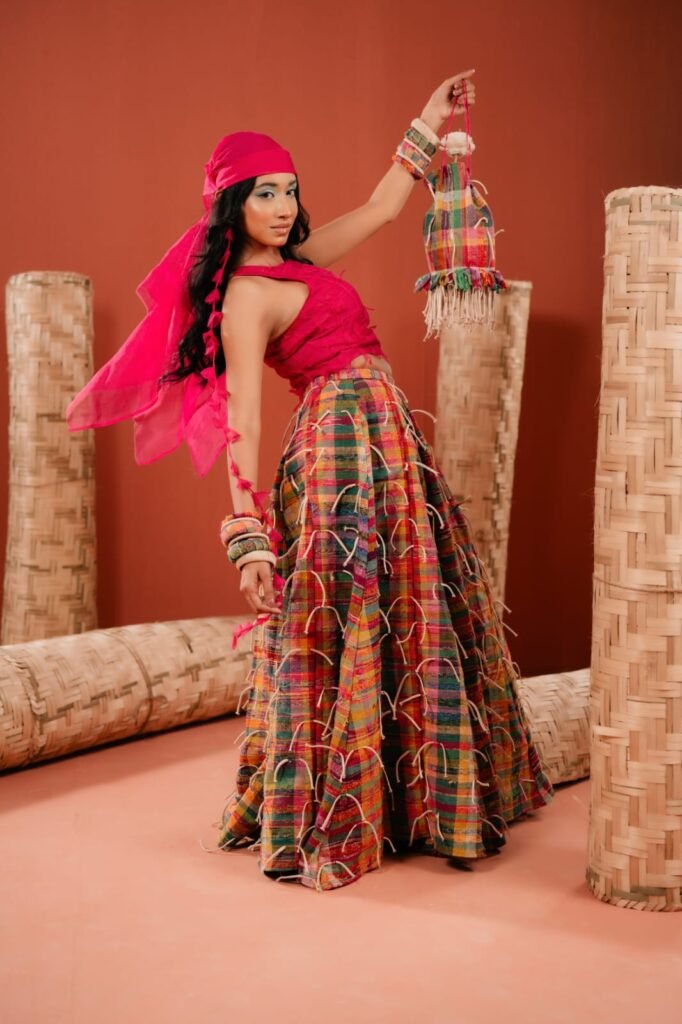
Old, torn, and no longer wearable sarees and scarves collected from the designer’s loved ones were given a second life through the expertise of master weavers in Rangpur. Each fabric was carefully cut into narrow strips and transformed into both warp and weft before being woven on traditional handlooms using 500 warp threads on a 40-shana reed. Fringes were incorporated directly into the weaving process, preserving the handcrafted authenticity of every textile.
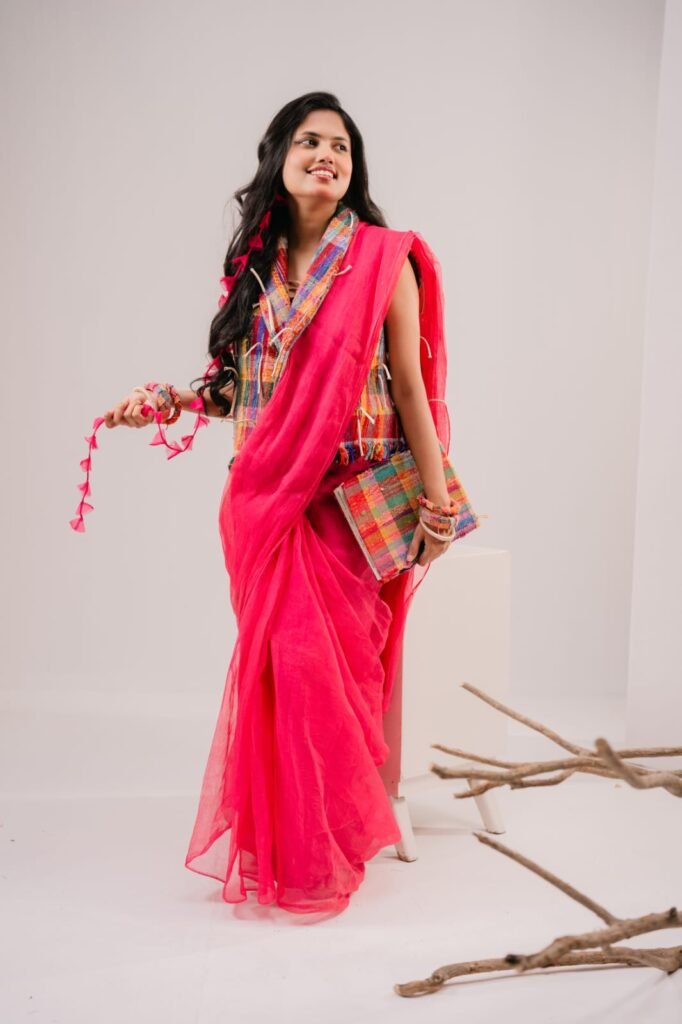
The newly woven recycled fabrics were then thoughtfully combined with Muslin and Balaka Silk, creating garments that balance texture, transparency, and structural depth. The resulting pieces celebrate both the softness of heritage textiles and the boldness of contemporary fashion design.
The Language of Eco Couture
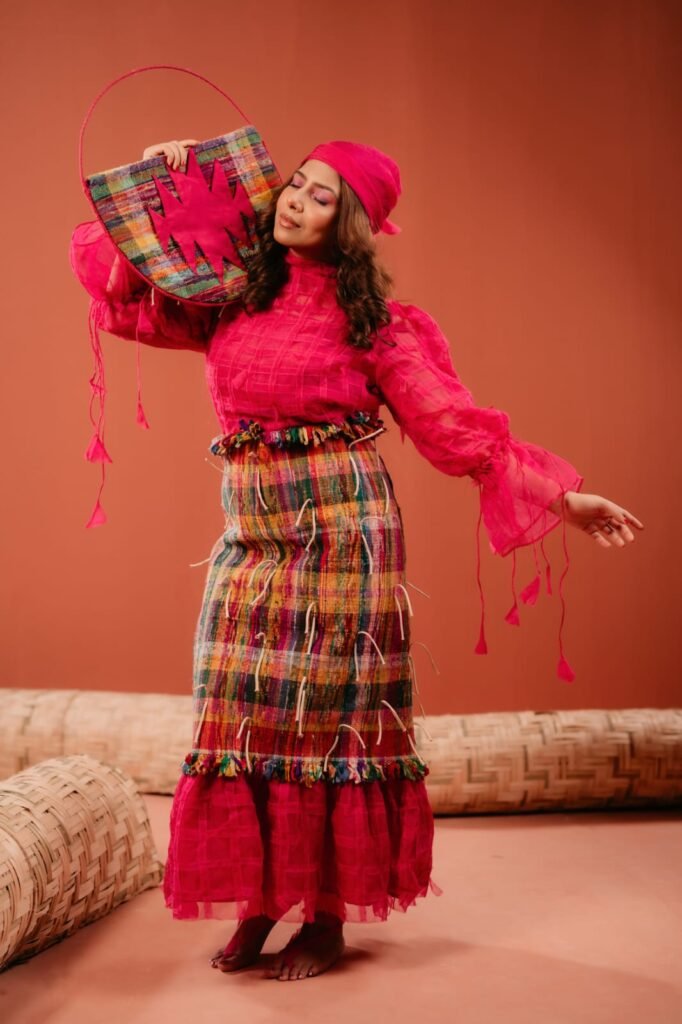
Echoes in Loom is developed within the philosophy of Eco Couture—a form of luxury fashion that values exceptional craftsmanship, environmentally responsible materials, ethical production, and timeless design.
Instead of treating sustainability as an aesthetic trend, the collection positions it as a design methodology. Every garment demonstrates that luxury can emerge from mindful resourcefulness rather than excessive consumption.
Through reconstructed textiles, handcrafted weaving, and durable design, the collection challenges the disposable nature of fast fashion while encouraging garments that carry emotional value and lasting significance.
Shola Craft: Completing the Story
Complementing the garments are handcrafted floral accessories made from Shola, one of Bengal’s oldest traditional handicrafts.
Celebrated for its lightweight texture, delicate craftsmanship, and cultural significance, Shola has historically adorned ceremonial decorations and traditional ornaments across Bengal. Within Echoes in Loom, these handcrafted floral elements add another layer of indigenous artistry, creating harmony between different branches of Bangladesh’s traditional crafts.
Together, weaving and Shola craftsmanship establish a holistic celebration of the country’s rich artisanal heritage.
Echoes Beyond the Loom
Although inspired by Shataranji, the conceptual core of the collection extends beyond a single craft.
The title, “Echoes in Loom,” symbolizes the enduring resonance of traditional weaving within contemporary fashion. Through Muslin layering, fabric manipulation techniques, and handcrafted recycled textiles, Shaily recreates the visual rhythm and tactile essence of woven structures in innovative forms.
The collection transforms the loom from a production tool into a storytelling medium—where every thread carries fragments of memory, history, and identity.
A Heritage Worth Preserving
The story of Shataranji itself reflects resilience.
Historical records note that in 1830, Rangpur’s British Collector Mr. Nisbet visited Pirpur village and became deeply impressed by the craftsmanship of local Shataranji weavers. His encouragement helped introduce the woven products to wider markets and contributed to the craft’s growing recognition.
However, following the Partition of 1947, the industry experienced significant decline due to shrinking markets and reduced demand, placing the centuries-old tradition at risk of disappearing.
The craft’s revival came through the dedication of local artisans, entrepreneurs, and cultural advocates who worked to preserve and promote this unique weaving heritage. Their efforts culminated in 2021, when Rangpur Shataranji was officially granted Geographical Indication (GI) status, recognizing it as an authentic cultural product of Bangladesh and safeguarding its identity for future generations.
Fashion with Responsibility
At its core, Echoes in Loom is an invitation to rethink our relationship with clothing.
It asks fundamental questions: Where do our garments come from? Who makes them? How long do we value them before replacing them?
By transforming sentimental yet discarded textiles into contemporary couture, Shaily illustrates that clothing can preserve memories while reducing environmental impact. The collection advocates for slower, more intentional fashion choices without compromising creativity or elegance.
As the global fashion industry continues to search for more sustainable pathways, Echoes in Loom stands as an inspiring example of how traditional craftsmanship, recycled materials, and thoughtful design can coexist to create meaningful luxury.
Rather than viewing sustainability as a passing trend, Raisha Amin Shaily reminds us that it is a shared responsibility—one rooted in preserving heritage, respecting craftsmanship, and leaving a more conscious legacy for future generations.
Raisha Amin Shaily
Fashion designer and visual storyteller through fashion.