



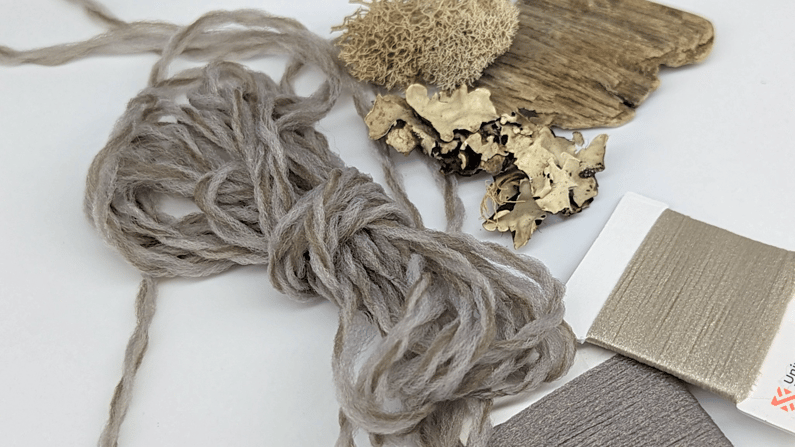
Wool is a natural protein fiber primarily obtained from sheep, renowned for its warmth, elasticity, and moisture-management properties. Its unique crimped structure provides excellent insulation, resilience, and comfort, making it suitable for apparel, home textiles, and technical applications. With natural thermo-regulation and flame resistance, wool remains one of the most functional and versatile fibers in the textile industry.
Structure & Unique Properties
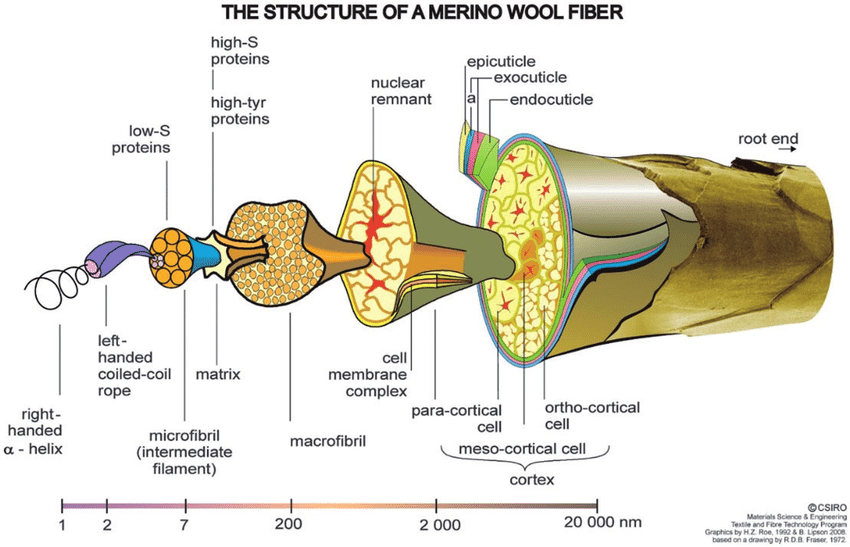
- Wool is composed of keratin with a scale-covered cuticle and cortical cells.
- Crimp gives wool elasticity, bulk, and insulation.
- Hygroscopic: absorbs up to 30% moisture without feeling wet.
- Thermo-regulating: keeps warm in winter and cool in summer.
- Flame resistant and UV protective.[2][4]
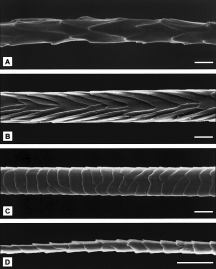
Specialty Animal Fibers: Cashmere, Alpaca, Mohair
Cashmere
- Comes from undercoat of Cashmere goats.
- Extremely soft, fine (14–19 microns), luxurious, lightweight.
- Expensive due to low annual yield (~150 g per goat).[5]
Alpaca
- Sourced from alpacas (Huacaya & Suri).
- Warmer and lighter than sheep wool.
- Naturally hypoallergenic (low lanolin).[5]
Mohair
- Fiber from Angora goats.
- Known for luster, strength, dyeability.
- Used in fashion fabrics, scarves, furnishings.[5]
Wool Processing (Scouring to Spinning)
- Shearing: Removing fleece from sheep.
- Skirting & Grading: Sorting wool based on quality.
- Scouring: Washing to remove grease, dirt, lanolin.
- Carding: Aligning fibers into a sliver.
- Combing (for worsted): Removing short fibers (noils).
- Drawing: Combining & elongating slivers.
- Spinning: Converting roving into yarn.
- Finishing: Washing, dyeing, setting twist.[2][3][6]
Global Market Trends
Production Trends
- Major producers: Australia, New Zealand, China, Argentina, UK.
- Fine Merino wool demand rising for luxury and sportswear.
Market Shifts
- Growth in sustainable & biodegradable fibers increases wool demand.
- Specialty fibers (cashmere, alpaca) rising in luxury fashion.
- Synthetic competition remains strong due to low cost.
Price Trends
- Prices fluctuate based on climate, demand, quality, and global fashion cycles.[6]
Wool in Performance Wear
- Merino wool popular in sports, hiking, outdoor gear.
- Key performance features:
✓ Moisture-wicking
✓ Odor resistance
✓ Temperature regulation
✓ Softness (fine microns) - Used in base layers, socks, activewear, insulation layers.
Sustainability Issues
Positive Aspects
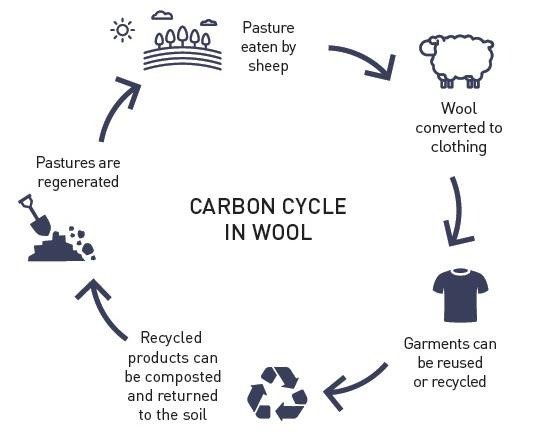
- Biodegradable, renewable, recyclable.
- Long lifespan.
- Lower microfiber pollution compared to synthetics.
Challenges
- Land use & overgrazing in some regions.
- Water use in scouring.
- Methane emissions from sheep.
- Animal welfare concerns (mulesing, handling).
Trends
- Growth of Responsible Wool Standard (RWS), traceability, ethical farming.[5][6]
Wool continues to hold strong relevance in modern textiles due to its performance, sustainability, and premium appeal. The growing demand for specialty fibers like cashmere, alpaca, and mohair, along with rising interest in eco-friendly materials, is driving market growth. Despite environmental and welfare challenges, wool remains a valuable natural fiber for both luxury and high-performance applications.
Written by: Samia Islam, Student, Bangladesh University of Textiles (BUTEX)
References
[1]FAO. (2020). Wool and other animal fibres: Production and market trends. Food and Agriculture Organization of the United Nations. https://www.fao.org
[2]International Wool Textile Organization (IWTO). (2021).Responsible wool and global wool supply chain standards. IWTO. https://www.iwto.org
[3]]Kadolph, S. J. (2014). Textiles (11th ed.). Pearson.
[4]Shanahan, D. J. (2015). Textile fibres: Properties and processing. Woodhead Publishing.
[5]Sothmann, I. (2019). Specialty fibers in global textile markets: Cashmere, alpaca & mohair. Journal of Natural Fibers, 16(5), 623–635. https://doi.org/10.1080/15440478.2018.1453437
[6]The Woolmark Company. (2022).Wool science, performance, and textile applications. https://www.woolmark.com