



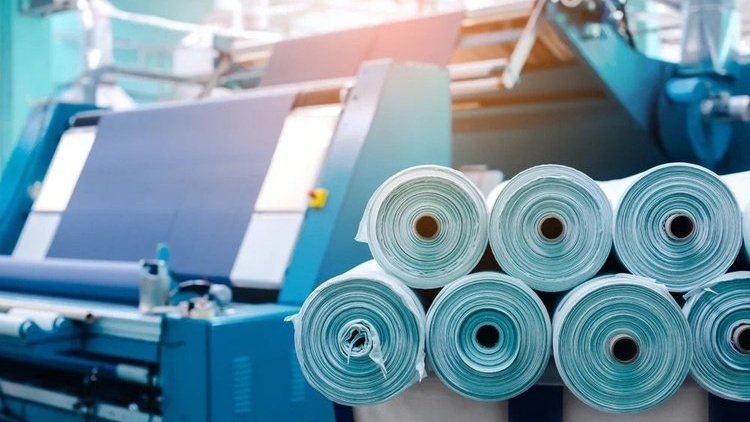
Synthetic fibers, like nylon, are essential to modern life, offering superior durability and versatility compared to many natural fibers. They are engineered polymers that dominate both industrial and apparel markets but face growing environmental scrutiny.
Introduction to Synthetic Fibers
Nylon is defined as a manufactured fiber in which the fiber-forming substance is any long-chain synthetic polyamide having recurring amide groups ( -CONH- ) as an integral part 85% of the polymer chain.
History
1. Nylon is the first purely synthetic fiber in the world and is commonly known as synthetic textile fiber.
2. Dr. Wallace H. Carothers of the DuPont Company and his team started their research in 1928, and in 1935, the Nylon 6.6 polymer was invented. It became known as Nylon.
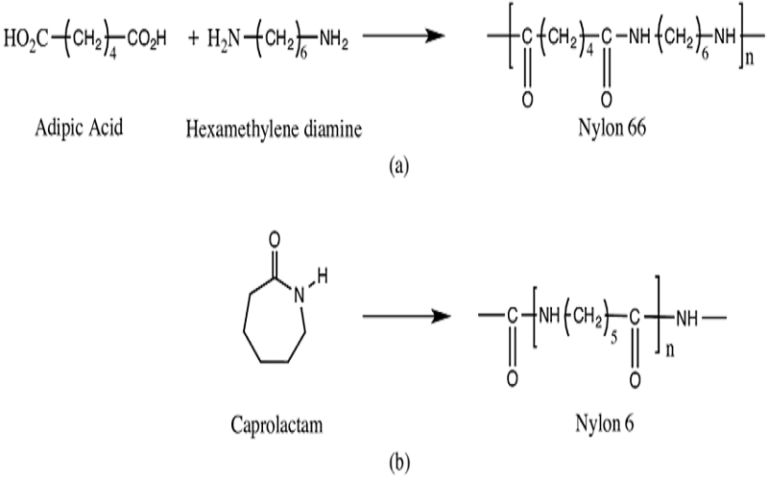
3. The Nylon 6.6 polymer is made from the polymerization of Hexamethylenediamine and Adipic Acid.
4. In the mixed chemical ingredients of this polymer (Hexamethylenediamine and Adipic Acid), each molecule has 6 carbon atoms. Due to this feature, this nylon is identified and named Nylon 6.6.
5.In 1939, the German company I.G. Farben developed the Nylon 6 polymer, also known as Perlon.
6. Nylon 6 is made from the polymerization of Caprolactam.
7. Nylon was first commercially used in the UK and Canada in 1939 to make stockings.
Synthetic fibers are man-made fibers created through chemical processes, primarily from organic polymers derived from petrochemicals (crude oil). Unlike regenerated fibers (like rayon), which start with natural materials like cellulose, true synthetics are built entirely from chemical compounds (monomers).
They are characterized by:
- High Strength and Durability
- Excellent Abrasion and Chemical Resistance
- Good Dimensional Stability (resistance to shrinking/wrinkling)
– Customizable Properties (engineered for specific applications)
Nylon: Chemistry & Features
Nylon was the first commercially successful true synthetic fiber, initially developed in the 1930s by DuPont. It is a polyamide fiber, meaning its polymer chain is linked by the amide group (–NH–CO–).
Chemistry:
Nylon is typically a condensation copolymer formed by reacting a diamine and a dicarboxylic acid, or via the ring-opening polymerization of a lactam. The two most common types are:
- Nylon 6,6: Formed from Hexamethylenediamine and Adipic acid.
- Nylon 6: Formed from Caprolactam.
Key Features:
- Excellent Strength and Elasticity
- Very Good Abrasion Resistance
- Wrinkle Resistance
- Poor Absorbency (dries quickly)
- Difficult to Dye (especially Nylon 6,6)
- The difference between Nylon 6 & Nylon 6.6
| Feature | Nylon 6 | Nylon 6.6 |
| 1. Known as | Poly caprolactam | Polyhexamethylene Adipamide. |
| 2. Structure/ Formation | Ring opening polymerization | Condensation polymerization of a diamine and a dicarboxylic acid |
| 3. Monomers | One type of monomer | Two types of monomer |
| 4. Produced from | Caprolactam | Hexamethylenediamine and Adipic acid |
| 5. Number of carbon atoms | 6 | 12 |
| 6. Crystallinity | Less Crystalline | More Crystalline |
| 7. Shrinkage | Less | More |
| 8. UV-sensitivity | Less | More |
| 9. Melting point | 215°C | 250°C |
| 10. Production cost | Relatively less | More than Nylon 6 |
| 11. Innovation/Discovery | Produced successfully by Germany’s I. G. Farben in 1937. | Successfully invented by Du Pont Company in 1935. |
Other Major Synthetics (PP, PE)
While Nylon is a polyamide, other major synthetic fibers belong to different chemical groups:
| Fiber | Chemical Class | Primary Monomer | Key Features |
| Polyester (PET) | Polyesters | Ethylene Glycol & Terephthalic Acid | Versatile, wrinkle-resistant, affordable, strong. Often blended with cotton. |
| Polypropylene (PP) | Polyolefins | Propylene | Lightweight, hydrophobic (quick drying), chemically inert, good for ropes/carpets. |
| Polyethylene (PE) | Polyolefins | Ethylene | Used less for apparel, but high-performance PE fibers (e.g., Dyneema) offer extreme strength and tear resistance. |
Industrial & Apparel Uses
- Apparel & Textile Uses for Nylon :
1. Garment coating, Sportswear, Hosiery, Knitwear, and similar textile products.
2. Toothbrushes and other personal care brushes.
3. Fasteners (zippers).
4. Nylon-coated fabric (This point is a bit fragmented, likely referring to different types of nylon-containing
fabrics or finishes).
5. Net cloth, Jersey fabric, Scarf, etc.
6. Tarpaulin is made using a layer of Nylon 6.6.
7. Filter cloth, Carpet, Safety belt, Uniform etc.
8. Knitted fabric is used to make garments.
- Industrial & Miscellaneous Uses
1. Rope, Conveyor belt, Safety seat belt and its component parts (such as timing belt and engine belt) are made.
2. Parachute material, Cord, Ropes for ships, Sewing thread, etc., are used.
3. Industrial hose is made.
4. Syringe (Hose) is used to make.
5. Fine brushes, surgical instruments and their parts are made in the medical sector.
6. Fishing net, boat, yarn and other equipment (e.g., sailcloth).
7. Home furnishing, Industry.
8. Hose and pipe are made.
Synthetic fibers are ubiquitous due to their performance characteristics:
Apparel:
- Polyester: Clothing of all types, Often blended with natural fibers for durability and easy care.
- Spandex (Polyurethane): Activewear, Swimsuits (for stretch and recovery).
Industrial & Technical Uses:
- Polyester: Geotextiles, Conveyor belts, Fiberfill for insulation.
- PP/PE: Ropes, Technical textiles, Geotextiles (for soil reinforcement), Filtration fabrics.
Market Evolution
The market has evolved from using synthetics as simple substitutes for silk (Nylon) or wool (Acrylic) to engineering them for high-performance applications (e.g., moisture-wicking athletic wear, aramid fibers like Kevlar). The focus has shifted toward creating sophisticated microfibers and technical textiles that meet demanding industrial standards (automotive, medical, construction).
Environmental Issues
The environmental impact of synthetic fibers is a major challenge:
- Fossil Fuel Dependence : Synthetic fibers are derived from non-renewable petroleum.
- Non-Biodegradability : They do not readily decompose, contributing to landfill waste.
- Microplastic Pollution : Washing synthetic clothing releases tiny plastic fibers (microplastics) into waterways, harming aquatic life and entering the human food chain.
- Chemical Use : The manufacturing and dyeing processes often involve toxic chemicals.
Future Innovations
To address challenges, the future of synthetic fibers is focused on sustainability and performance:
- Recycling: Developing more efficient mechanical and chemical recycling processes for textiles, especially for mixed-fiber garments.
- Bio-Polymers: Shifting feedstock from petrochemicals to bio-based monomers derived from renewable resources (e.g., plant sugars).
- Enzyme Technology: Using biotechnological solutions (enzymes) to selectively break down polymers, offering a greener way to recover pure monomers for recycling.
- Enhanced Performance: Developing smart textiles, such as fibers with integrated electronics or advanced thermal regulation properties.
Conclusion
Nylon and its synthetic counterparts have revolutionized both apparel and industrial engineering through their strength, durability, and cost-effectiveness. However, the industry is at a critical juncture, balancing the demand for high-performance materials with the urgent need to mitigate their significant environmental footprint, driving innovation toward a more circular and sustainable textile economy.
Written by: Fahima Akter


Pedagogic and enlightening 👍