



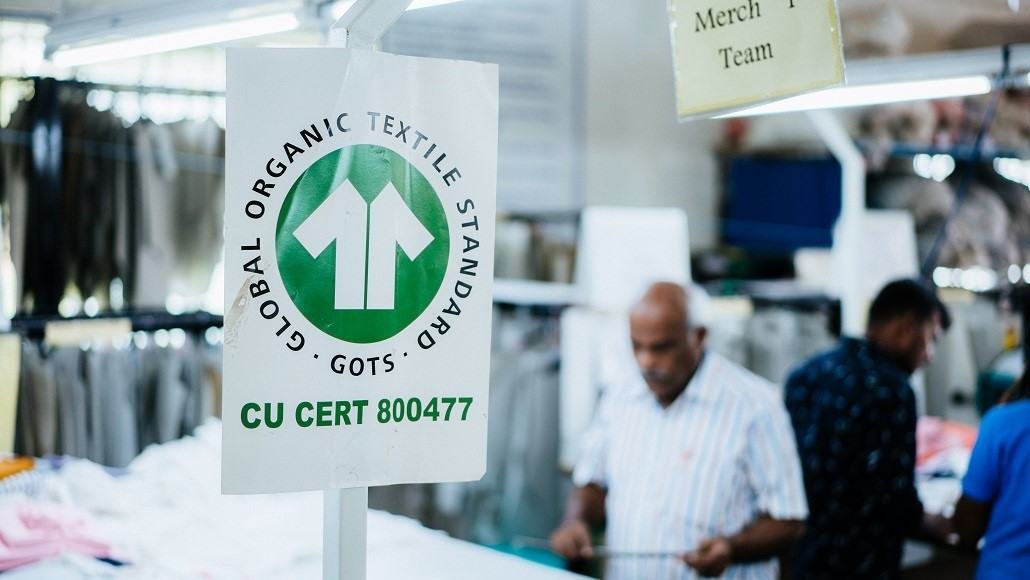
The Global Organic Textile Standard (GOTS) has released Version 8.0 of its sustainability standard, introducing stricter environmental, chemical and governance requirements for certified textile companies.
The updated framework includes mandatory due diligence aligned with OECD guidance, requiring certified organisations to strengthen ESG disclosure, anti-corruption policies and conflict-of-interest safeguards.
Environmental criteria have also been tightened, with clearer rules on air emissions, waste management and climate reporting. Companies must now develop Scope 1 and Scope 2 greenhouse-gas inventories and demonstrate measurable progress in reducing emissions.
Chemical management has been strengthened through a new Manufacturing Restricted Substances List (MRSL), stricter limits on substances such as free aniline in indigo dyes, and tighter controls on PFAS chemicals. The update also improves testing procedures to verify non-GMO cotton fibres.
The standard further introduces measures on microfibre pollution, circular business models, product durability and sustainable packaging. Additional safety and residue testing requirements have been added for hygiene products.
According to Global Standard Managing Director Rahul Bhajekar, the new version reflects extensive stakeholder collaboration and aims to strengthen sustainability governance across the textile supply chain.
The revised standard will fully take effect on 1 March 2027, allowing certified companies a transition period to comply with the new rules.