



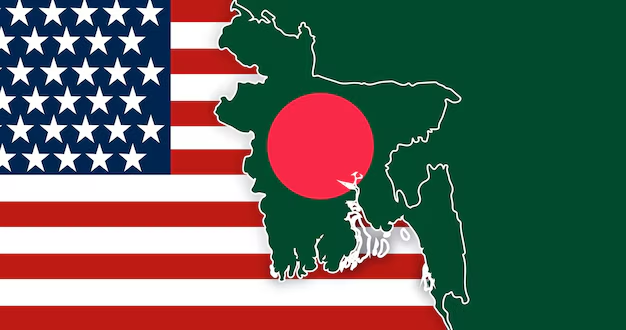
American apparel brands are reassessing their global sourcing strategies following a new tariff agreement between Bangladesh and the United States, with implications for textile and apparel supply chains.
The Agreement on Reciprocal Tariff, signed on February 9, reduces duties on Bangladeshi goods from 20% to 19% while introducing duty-free access for garments produced using US-origin cotton and man-made fibres. The policy shift is encouraging brands to re-evaluate sourcing models amid ongoing tariff pressures and geopolitical uncertainty.
According to a study by Sheng Lu of the University of Delaware, US fashion companies are adopting four key sourcing strategies: diversifying supply bases, reducing dependence on China, increasing procurement from cost-competitive hubs such as Bangladesh and Vietnam, and exploring near-shoring options in Mexico and Central America.
The report indicates that while Bangladesh stands to benefit from the revised tariff structure, sourcing decisions will depend heavily on compliance with US cotton usage requirements. Adjustments across supply chains are expected to take between 12 and 18 months, reflecting the complexity of shifting production networks.
Major industry players, including Kontoor Brands, highlighted Bangladesh’s growing importance in their sourcing portfolios, noting that tariff exposure will vary depending on the extent of US-origin inputs. Meanwhile, brands such as Ralph Lauren and Lands’ End signalled ongoing diversification efforts to manage risk and optimise costs.
Responding to the development, Mahmud Hasan Khan, president of the Bangladesh Garment Manufacturers and Exporters Association, emphasised the need for a clear verification mechanism to confirm the use of US cotton in Bangladesh-made garments, ensuring eligibility for tariff benefits.
The evolving trade landscape underscores a broader shift in global sourcing dynamics, where policy incentives, cost competitiveness, and supply chain resilience are increasingly shaping procurement decisions. Despite challenges, Bangladesh remains a critical player in the global apparel market, supported by its strong manufacturing base and competitive production costs.