



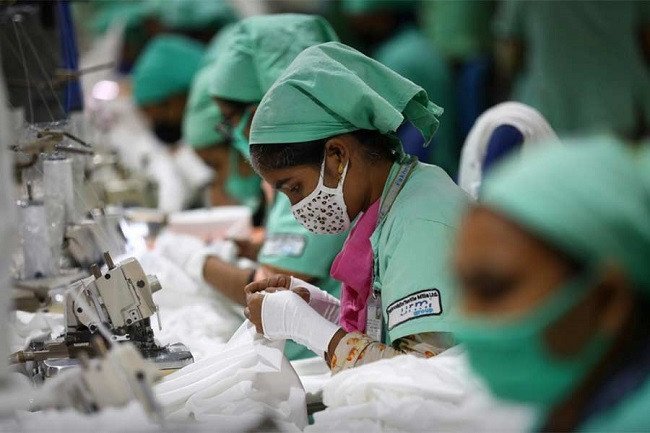
India’s leading knitwear manufacturing hub, Tiruppur, recorded garment exports worth ₹42,544.40 crore ($4.4 billion) during fiscal year 2025-26, reflecting a 4.91 per cent decline compared to ₹44,747 crore ($4.7 billion) achieved in the previous fiscal year, according to the Tiruppur Exporters Association (TEA).
Despite the decline, industry leaders say the export performance demonstrates the resilience of the Tiruppur garment cluster amid a challenging global trade environment.
TEA President K M Subramanian attributed the slowdown primarily to tariff-related uncertainties in the United States and disruptions to international trade and shipping routes caused by the ongoing West Asia crisis. These factors created significant challenges for exporters throughout the fiscal year.
However, Subramanian noted that maintaining exports above ₹42,500 crore under such circumstances highlights the strong competitiveness and adaptability of Tiruppur’s textile and apparel industry.
Looking ahead, the industry remains optimistic about future growth opportunities. According to TEA, improved utilization of Free Trade Agreements (FTAs), increasing export demand, rising global interest in man-made fibre (MMF) garments, and the sector’s growing focus on sustainability are expected to support long-term expansion.
The association has also been actively engaging with both central and state governments to address industry concerns and strengthen the competitiveness of the textile sector. While several proposals submitted by the industry have already received policy support, others remain under review.
Subramanian expressed confidence that with continued government support, strategic investments, and expansion across the textile value chain, Tiruppur has the potential to achieve annual garment exports of ₹1 lakh crore by 2030.
As one of India’s most important apparel export hubs, Tiruppur continues to play a critical role in the country’s textile economy, contributing significantly to employment, manufacturing growth, and export earnings. Industry stakeholders believe that leveraging trade agreements, diversifying product offerings, and advancing sustainable manufacturing practices will be key to sustaining future growth and strengthening the region’s position in global apparel markets.