



Bangladesh’s economy is projected to expand by 4.4% in fiscal year 2026–27 (FY27), supported by easing global economic pressures, recovering exports and ongoing domestic reforms, according to a new outlook from HSBC.
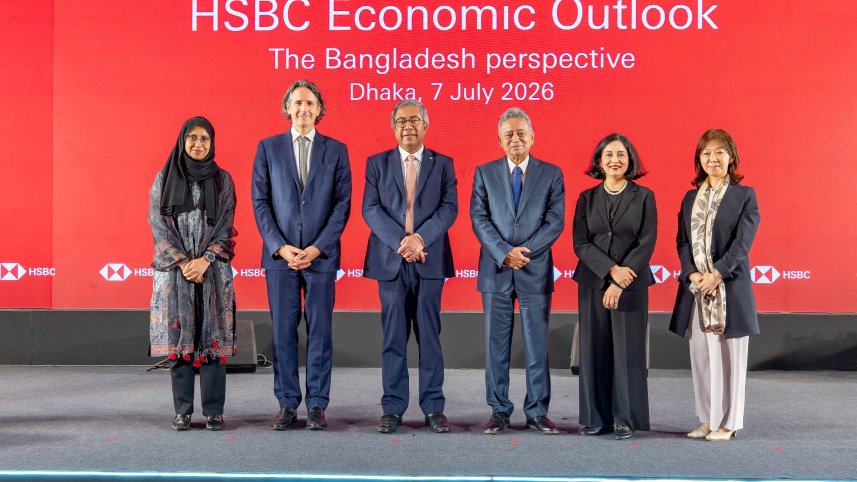
The forecast was presented during an economic outlook event held at Sheraton Dhaka on Tuesday, where HSBC economists highlighted improving external conditions and reform initiatives as key drivers of Bangladesh’s economic recovery.
Frederic Neumann, Chief Asia Economist and Co-Head of Global Investment Research for Asia at HSBC, said Bangladesh has continued to demonstrate resilience despite recent economic challenges.
“Bangladesh’s economy continues to impress with its resilience,” Neumann said.
He noted that lower global oil prices, a more stable outlook for US tariff policies and resilient global growth are expected to support a recovery in Bangladesh’s export sector, particularly ready-made garments (RMG), during the second half of the fiscal year.
“Ongoing economic reforms are also gaining traction domestically, ultimately supporting private investment and consumption. Bangladesh is, therefore, on a steady path to recovery, with growth expected to accelerate to 4.4% over the coming fiscal year,” he added.
The projection comes as Bangladesh continues efforts to strengthen macroeconomic stability following two years marked by elevated inflation, pressure on foreign exchange reserves and slower economic growth.
According to provisional data from the Bangladesh Bureau of Statistics (BBS), the country’s gross domestic product (GDP) grew by 4.14% in FY26, up from 3.49% in the previous fiscal year. The government has set a 6.5% GDP growth target for FY27.
Speaking at the event, Finance and Planning Minister Amir Khosru Mahmud Chowdhury said restoring business confidence while maintaining macroeconomic stability would remain one of the government’s biggest priorities amid continued global uncertainty.
He said the government is working to strengthen institutions, reduce bureaucratic hurdles and improve the overall business environment to encourage private investment.
The minister also stressed the importance of diversifying Bangladesh’s export base beyond the ready-made garment sector by improving competitiveness, expanding market access, removing regulatory barriers and accelerating industrial development through economic zones.
Priya Kini, Managing Director and Head of Banking for International Markets in Asia at HSBC, said businesses require timely economic insights to navigate an increasingly uncertain global and geopolitical landscape.
Meanwhile, Md Mahbub ur Rahman, Chief Executive Officer of HSBC Bangladesh, said the country’s next phase of development would depend not only on achieving higher economic growth but also on improving the quality and sustainability of that growth.
He emphasized the need for stronger governance, enhanced competitiveness and greater value addition to build a more diversified and resilient economy.