



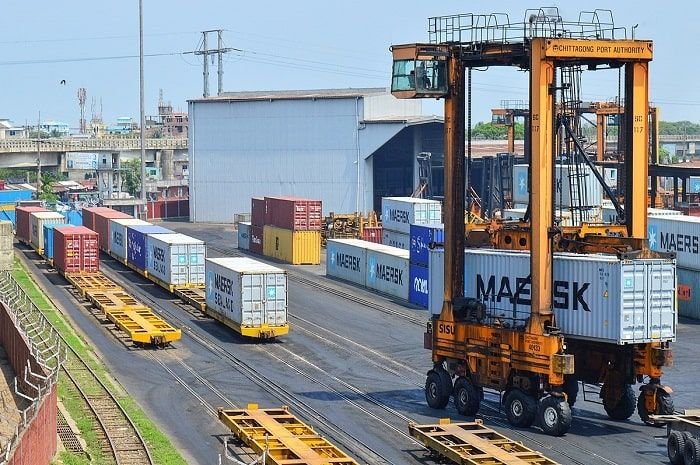
Bangladesh’s leading business associations have jointly urged the government to introduce an emergency financial and policy support package after severe flooding disrupted operations at Chattogram Port, warning that prolonged logistical disruptions could significantly affect exports, industrial production, imports, and national supply chains.
In a joint letter submitted to Shipping Adviser Sheikh Rabiul Alam on 12 July, the Bangladesh Garment Manufacturers and Exporters Association (BGMEA), Bangladesh Knitwear Manufacturers and Exporters Association (BKMEA), Bangladesh Textile Mills Association (BTMA), and the Chittagong Chamber of Commerce and Industry (CCCI) called for immediate government intervention to restore smooth port operations and reduce the financial burden on businesses affected by the ongoing flood situation.
The associations acknowledged the government’s continued efforts to promote trade and investment but noted that persistent heavy rainfall and flooding have severely impacted Chattogram Port, while also disrupting road and rail connectivity, creating major bottlenecks across the country’s import and export supply chain.
According to the trade bodies, flooding and waterlogging have hampered cargo unloading, storage, and transportation at Bangladesh’s busiest seaport, putting imported cotton, yarn, fabrics, industrial raw materials, chemicals, packaging materials, food products, and other moisture-sensitive goods at risk of damage.
They also warned that delays in exporting ready-made garments (RMG), home textiles, leather products, pharmaceuticals, agricultural products, and other manufactured goods could lead to shipment cancellations, export order losses, price reductions, late delivery penalties, and increased reliance on costly air freight.
The organisations referred to continuous heavy rainfall since 5 July, which caused floodwater to enter container yards at Chattogram Port and several private inland container depots (ICDs), resulting in reports of damage to both import and export cargo.
Expressing concern over the Chattogram Port Authority’s notice issued on 10 July, the associations criticised the authority’s decision to reject compensation claims for flood-damaged cargo and decline liability for related losses. They said the unilateral position has created widespread dissatisfaction among importers, exporters, shipping agents, and other port users.
To mitigate the economic impact, the business organisations proposed several immediate measures, including a temporary full or partial waiver of demurrage, detention charges, port rent, storage fees, yard charges, and other shipping-related costs for containers delayed due to flooding. They also requested suspension of additional charges until normal port operations resume.
The associations further urged the government to introduce a fast-track customs clearance system for industrial raw materials, export consignments, food items, medicines, and other essential or perishable products to minimise further delays.
On the financial front, they called for the introduction of special low-interest refinancing schemes and emergency working capital loans for affected industries, along with loan repayment extensions, loan rescheduling facilities, and temporary regulatory relief from loan classification requirements.
Additionally, the trade bodies sought extensions for letters of credit (LCs), back-to-back LCs, shipment deadlines, import and export schedules, and export proceeds repatriation timelines to help businesses cope with disruptions beyond their control.
They also requested more time for payment of utility bills—including electricity, gas, and water—as well as taxes, VAT, customs duties, withholding tax, and other government fees, while urging authorities to waive late payment penalties, interest, and surcharges.
The organisations further recommended forming a high-level inter-agency taskforce to coordinate emergency response efforts, improve disaster preparedness, strengthen climate resilience at ports, and ensure uninterrupted trade operations during future natural disasters.
Business leaders believe timely government intervention is essential to minimise supply chain disruptions, protect export competitiveness, and safeguard Bangladesh’s industrial and economic stability as the country continues to face increasing climate-related challenges.