



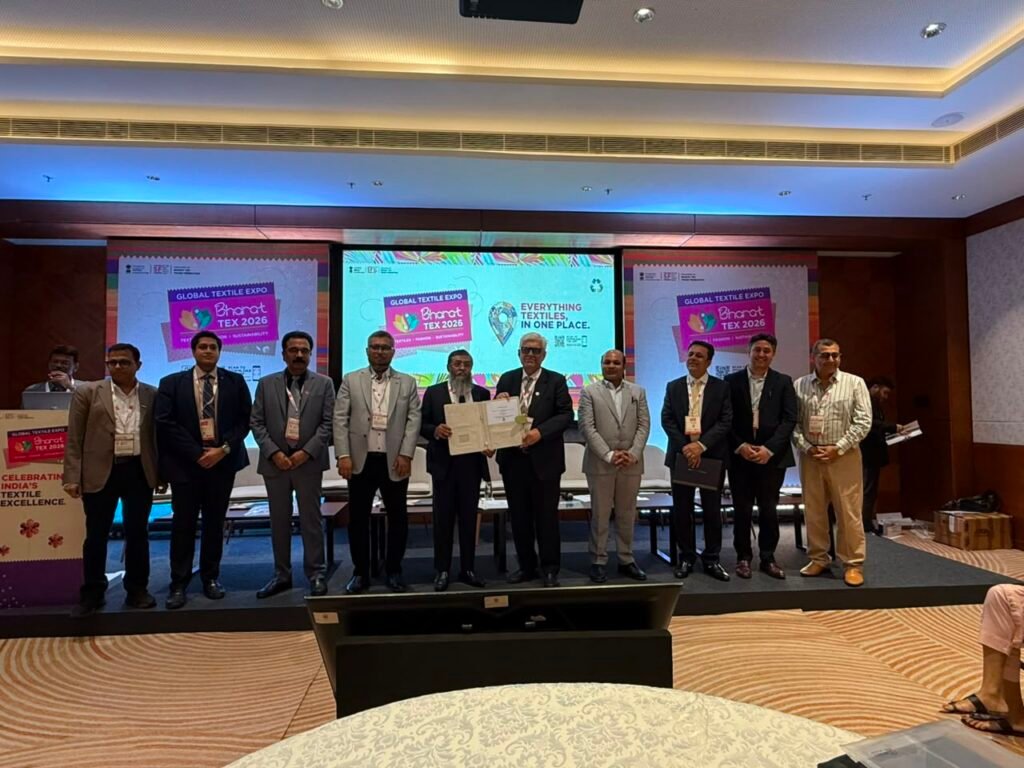
Bangladesh and India have taken a significant step toward strengthening bilateral textile and apparel trade as the Bangladesh Knitwear Manufacturers and Exporters Association (BKMEA) and India’s Cotton Textiles Export Promotion Council (TEXPROCIL) signed a Memorandum of Understanding (MoU) to enhance industry cooperation and promote regional economic growth.
The agreement was signed on 11 June in New Delhi by BKMEA President Mohammad Hatem and TEXPROCIL Executive Director Siddhartha Rajagopal, establishing a framework for closer collaboration between the textile and apparel sectors of the two neighboring countries.
The partnership aims to expand bilateral trade, strengthen supply chain cooperation, facilitate knowledge exchange, and create new business opportunities for textile and apparel manufacturers in Bangladesh and India.
Speaking at the signing ceremony, Mohammad Hatem said Bangladesh and India possess significant potential to deepen trade relations, particularly in the ready-made garment (RMG) and textile industries, through stronger institutional collaboration.
“There are huge prospects for enhancing bilateral trade, especially in the ready-made garment and textile sector, through stronger cooperation,” he said.
BKMEA Executive President Ehsan Fazlee Shamim highlighted India’s rapidly expanding middle-class consumer base as a promising destination for Bangladeshi apparel exports. He noted that Bangladesh’s RMG shipments to India have recorded encouraging growth in recent years and expressed optimism that closer cooperation would unlock additional business opportunities.
“We believe the apparel and textile sectors of the two countries can complement each other and achieve reciprocal benefits through closer cooperation,” he said.
Industry leaders believe the MoU will help facilitate greater business engagement, encourage investment, improve market access, and strengthen regional supply chain integration while supporting sustainable growth in South Asia’s textile and apparel industry.
The agreement also reflects growing efforts by both countries to leverage their complementary strengths and promote mutually beneficial trade relationships amid evolving global sourcing patterns.