



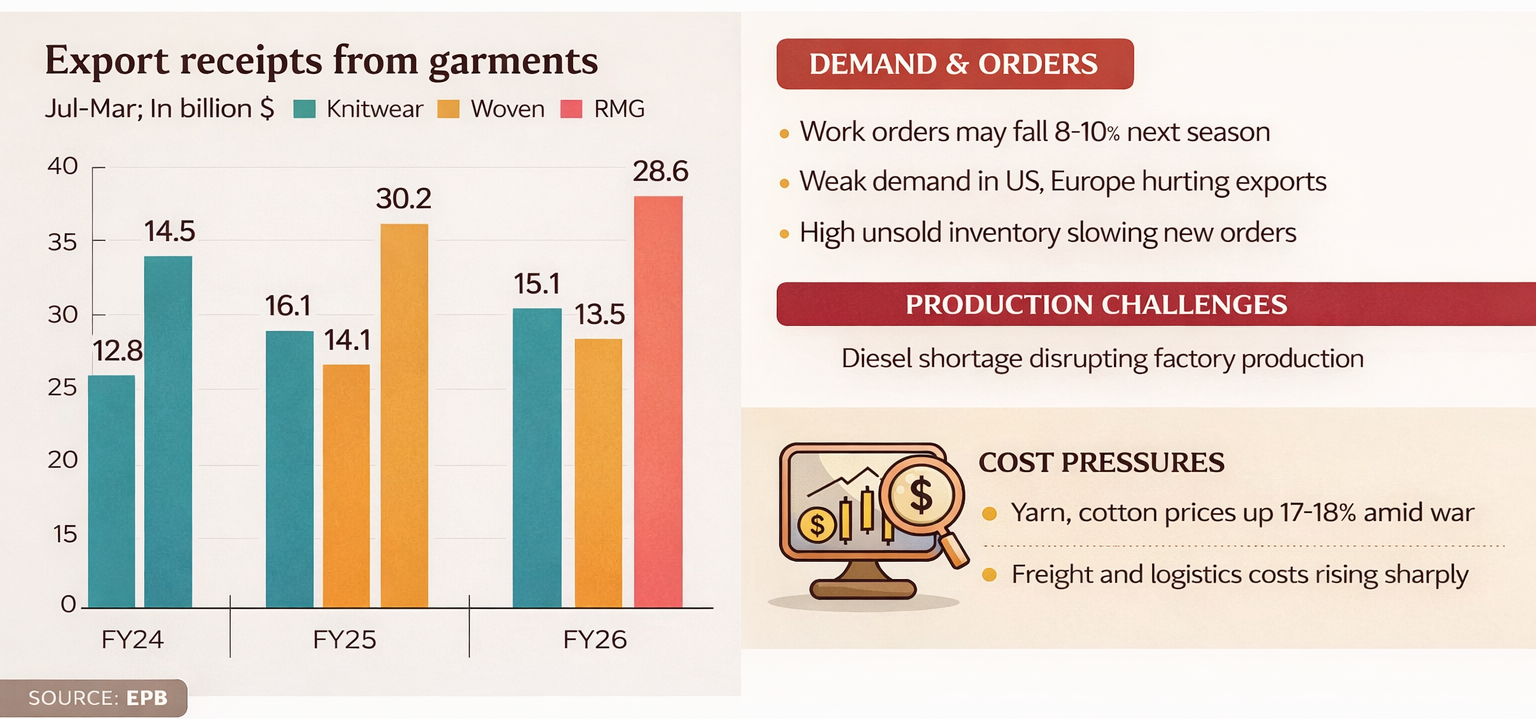
Bangladesh’s readymade garment (RMG) sector is coming under mounting pressure as energy shortages, rising costs and weakening global demand threaten export momentum, industry insiders warn.
Manufacturers say production has been significantly disrupted due to persistent gas and electricity shortages, forcing many factories to rely heavily on diesel-powered generators. However, limited fuel supply and rationing have constrained operations, leading to reduced output and delays in shipment schedules.
The situation has been further aggravated by the ongoing Middle East conflict, which has driven up global fuel prices and disrupted supply chains. Freight costs have surged, with transport expenses within Bangladesh reportedly increasing by around 20 percent, adding to the burden on exporters.
At the same time, Western retailers are expected to cut apparel orders by up to 10 percent in the upcoming season, as high inflation and unsold inventories weigh on consumer demand. Buyers across key markets in Europe and the United States remain cautious, limiting new order placements.
Rising raw material prices have also intensified pressure on manufacturers. Cotton prices have increased, pushing yarn costs up by 17 to 18 percent, while polyester fibre costs have climbed due to elevated crude oil prices. Despite these increases, buyers remain reluctant to accept higher prices, squeezing profit margins for exporters.
Industry leaders say the combination of higher costs and declining demand is creating a challenging environment for the sector, which accounts for more than 80 percent of Bangladesh’s total export earnings.
Exporters have warned that continued production disruptions may force some companies to shift to costly air shipments to meet delivery deadlines, further impacting profitability. Meanwhile, competing countries with more stable energy supplies and closer proximity to key markets are gaining an advantage.
Business leaders are urging stronger policy support, including improved energy supply, trade facilitation and cost relief measures, to help the industry remain competitive in an increasingly uncertain global market.
With multiple challenges converging, stakeholders fear that Bangladesh’s garment export growth could slow significantly in the coming months unless conditions improve.