



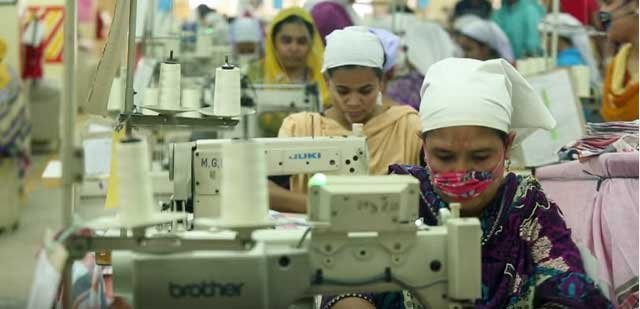
Readymade garment manufacturers in Bangladesh have urged the government to remove restrictions on sourcing raw materials free of cost (FOC) from local suppliers, citing policy inconsistency and lost opportunities for domestic value addition.
In a letter submitted to the National Board of Revenue (NBR) on April 9, the Bangladesh Knitwear Manufacturers and Exporters Association (BKMEA) called for clear guidelines and removal of barriers to enable local FOC sourcing.
Policy Gap and Industry Concerns
Industry leaders noted that while exporters are now permitted to import raw materials on an FOC basis under recent policy changes, no similar provision exists for sourcing inputs locally.
This lack of clarity—particularly around whether such transactions qualify as “deemed exports”—has created uncertainty, preventing manufacturers from using locally supplied FOC materials.
Mohammad Hatem said exporters face complications when international buyers nominate local suppliers to provide materials free of cost, due to the absence of a defined approval framework.
Potential Benefits for Local Industry
Stakeholders argue that allowing local FOC sourcing would:
- Boost domestic supplier sales
- Strengthen backward linkage industries
- Increase value addition in exports
- Reduce dependence on imported inputs
For example, industry leaders noted that if a $100,000 export order includes $60,000 worth of locally sourced FOC inputs, it would significantly reduce import requirements while supporting local businesses.
Call for Policy Alignment
Experts have questioned the rationale behind the current restriction. Md Lutfor Rahman stated that permitting FOC imports while restricting local sourcing lacks logical consistency, adding that proper monitoring could prevent misuse.
BKMEA emphasized that aligning local sourcing policies with existing FOC import provisions would improve efficiency and competitiveness in export operations, particularly under the cutting, making, and trimming (CMT) model.