



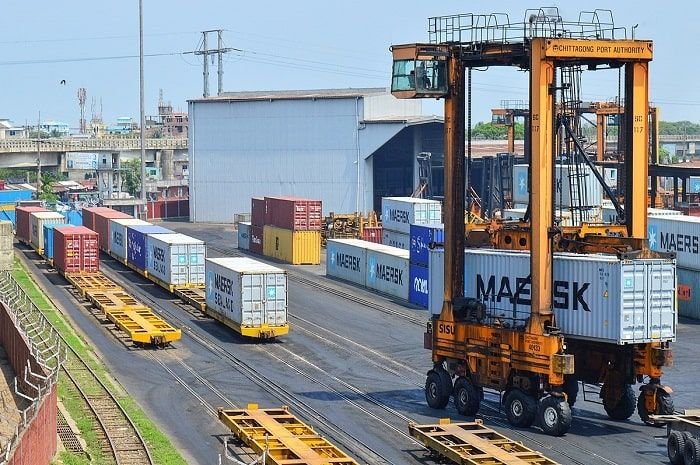
The future management of the New Mooring Container Terminal (NCT), the largest and most strategically important container terminal at Chittagong Port, has returned to the spotlight following the issuance of two separate government directives carrying different messages on the terminal’s proposed lease to Dubai-based port operator DP World.
The Ministry of Shipping first instructed Chittagong Port to either conclude the leasing process with DP World swiftly or cancel it altogether. However, a second letter issued later the same day directed the port authority to continue negotiations with the global port operator, triggering fresh debate over the government’s position on the matter.
Shipping Secretary Zakaria later clarified that there had been no policy shift and that discussions with DP World remain ongoing. According to him, the first communication was based on observations from the Public-Private Partnership (PPP) Authority, while the second letter was issued after the port authority sought further clarification regarding the negotiation process.
In response, Chittagong Port moved ahead with preparations for continued negotiations, forming a seven-member evaluation committee tasked with advancing the process and seeking ministry approval.
NCT remains the most critical container facility at Chittagong Port, handling approximately 44 percent of the port’s total container throughput last year. Since July 2024, the terminal has been operated by Chittagong Dry Dock Limited (CDDL), a Bangladesh Navy-owned enterprise, which has recorded significant operational improvements. In May alone, the terminal handled a record 126,000 twenty-foot equivalent units (TEUs), the highest monthly volume in its history.
The proposal to lease NCT to DP World originated during the previous government under a Public-Private Partnership (PPP) and Government-to-Government (G2G) framework. Although the initiative advanced to the negotiation stage, labour unrest, stakeholder objections and political changes delayed progress, leading to a suspension of the process in February this year.
The issue resurfaced in April during the fourth Bangladesh-Dubai Joint Public-Private Partnership Platform meeting, where DP World proposed not only operating NCT but also integrating it with the adjacent Chittagong Container Terminal (CCT) under a unified management structure.
Meanwhile, local multinational conglomerate MGH Group has also expressed interest in operating NCT, claiming its proposal could generate higher revenue per container than DP World’s offer. However, officials indicate that alternative proposals cannot be formally considered while negotiations with DP World remain active.
The debate has highlighted two competing visions for the terminal’s future. Domestic operators argue that a profitable and efficiently functioning terminal should remain under local management, while foreign participation should instead be directed toward new infrastructure projects such as the Bay Terminal. Supporters of the DP World proposal contend that international expertise, technology and investment could further enhance Chittagong Port’s competitiveness in regional and global trade.
As negotiations continue, the eventual decision on NCT’s future management is expected to play a significant role in shaping the long-term development strategy of Bangladesh’s largest maritime gateway.