



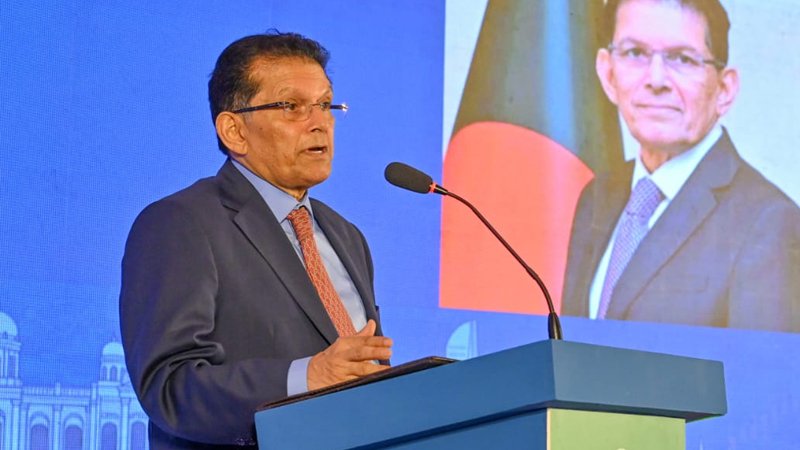
Foreign Minister Dr. Khalilur Rahman has reaffirmed the government’s commitment to transforming Bangladesh into South Asia’s most competitive investment destination, emphasizing stability, structural reforms, and a strengthened economic diplomacy framework to navigate growing global economic uncertainties.
Speaking at the conference titled “Roadmap for Trade, Growth & Economic Diplomacy 2026” in Dhaka on Saturday, the minister said the government is working to build a stable, predictable, and investment-friendly economy despite mounting challenges in the global landscape.
The day-long event, held at Pan Pacific Sonargaon Dhaka, was jointly organized by the Ministry of Foreign Affairs and the Bangladesh Investment Development Authority (BIDA), bringing together policymakers, foreign diplomats, development partners, business leaders, and economic experts.
Highlighting the evolving global economic environment, Dr. Rahman noted that trade tensions, energy market volatility, climate-related risks, and slowing global growth continue to create significant challenges for developing economies.
He warned that sluggish global economic expansion is constraining export demand, while volatility in international financial markets is making access to affordable financing increasingly difficult. Climate-related vulnerabilities and rising external debt burdens are also adding pressure on economic resilience, while the ongoing energy crisis is increasing production costs and undermining industrial competitiveness.
To address these challenges, the government has adopted a strategy centered on three key priorities: maintaining economic stability, implementing structural reforms, and strengthening national economic capacity.
“The government is reconfiguring its economic diplomacy to support these objectives and position Bangladesh as a preferred destination for global investment,” he said.
Reaffirming the country’s openness to international business, Dr. Rahman stated that Bangladesh remains committed to creating a transparent and investor-friendly environment through policy consistency, regulatory reforms, and improvements in the ease of doing business.
“Bangladesh is stable, predictable and open for investment,” he said, adding that ongoing reforms are designed to enhance investor confidence, improve governance, and support sustainable economic growth.
The minister expressed optimism that continued reform efforts, combined with proactive economic diplomacy, would help Bangladesh strengthen its competitiveness, attract higher levels of foreign direct investment, and sustain long-term economic development despite global headwinds.