



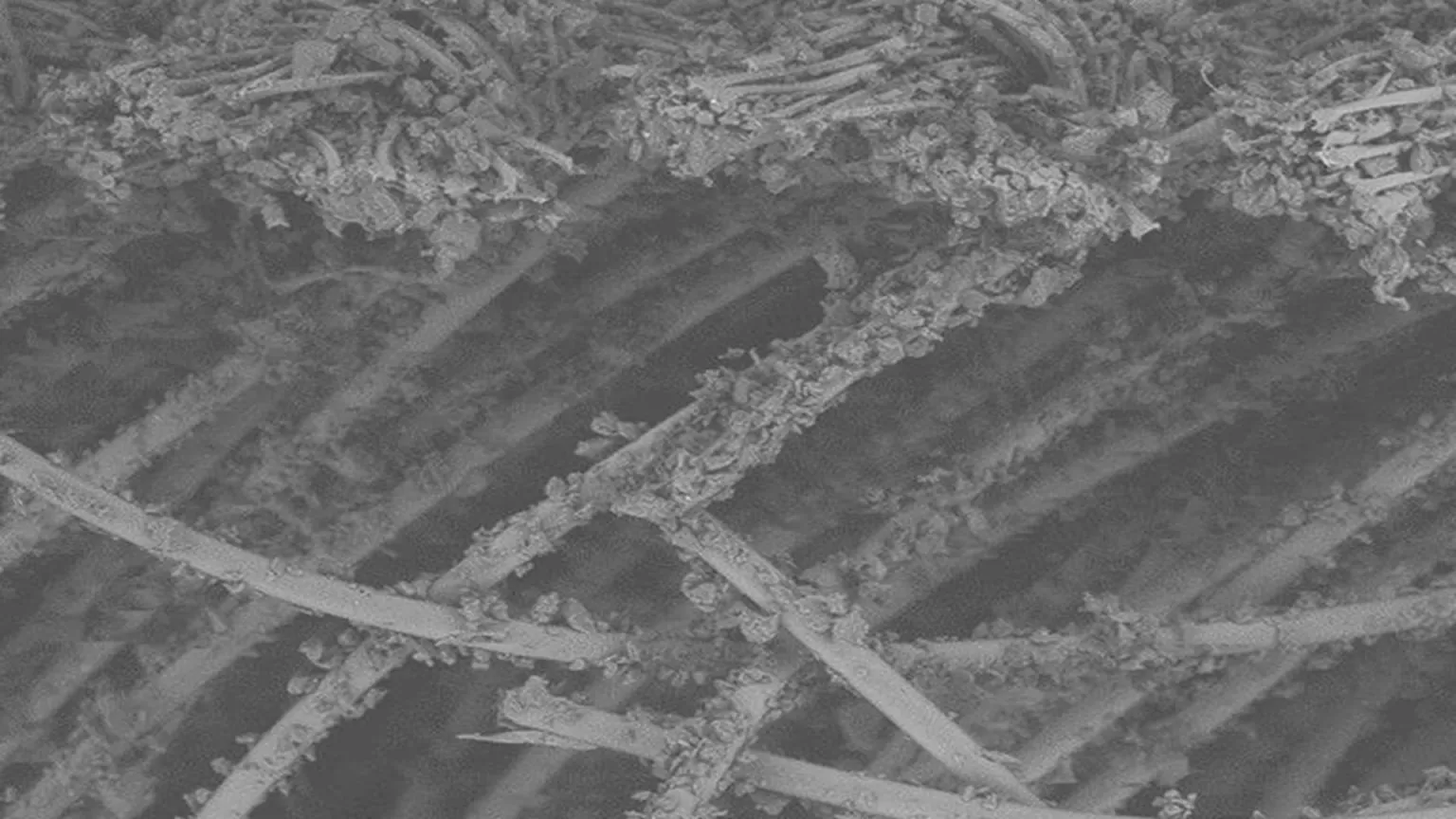
Researchers at the German Institutes of Textile and Fiber Research Denkendorf have developed a textile-based cascade filtration system designed to significantly reduce microplastic pollution from synthetic textile washing.
The multi-stage filter captures microfibres released during laundry processes, preventing them from entering wastewater streams and, ultimately, aquatic ecosystems. The system uses layered textile filter media with progressively smaller pore sizes, enabling the removal of particles as small as 1.5 micrometres.
Microfibre shedding from synthetic textiles remains a major environmental concern, with studies estimating releases of up to 1,400 milligrams per kilogram of fabric per wash. While conventional wastewater treatment plants can remove a large share of microplastics, high discharge volumes mean significant quantities still reach the environment.
The DITF solution introduces a three-stage cascade filter composed of advanced textile sandwich structures, combining polypropylene fabrics with 3D spacer knits. This design ensures high filtration efficiency even at low water pressure, while maintaining low maintenance requirements.
Field tests conducted at industrial laundries and municipal wastewater facilities demonstrated removal efficiencies of up to 98.5%, highlighting the system’s effectiveness in real-world conditions.
The system also incorporates a compressed-air backwashing mechanism, extending operational time by up to 155% and reducing maintenance frequency, making it a cost-effective and scalable solution.
Industry experts suggest that such textile-based filtration technologies could play a crucial role in addressing microplastic pollution at source, while also offering adaptable applications across broader wastewater treatment systems.