



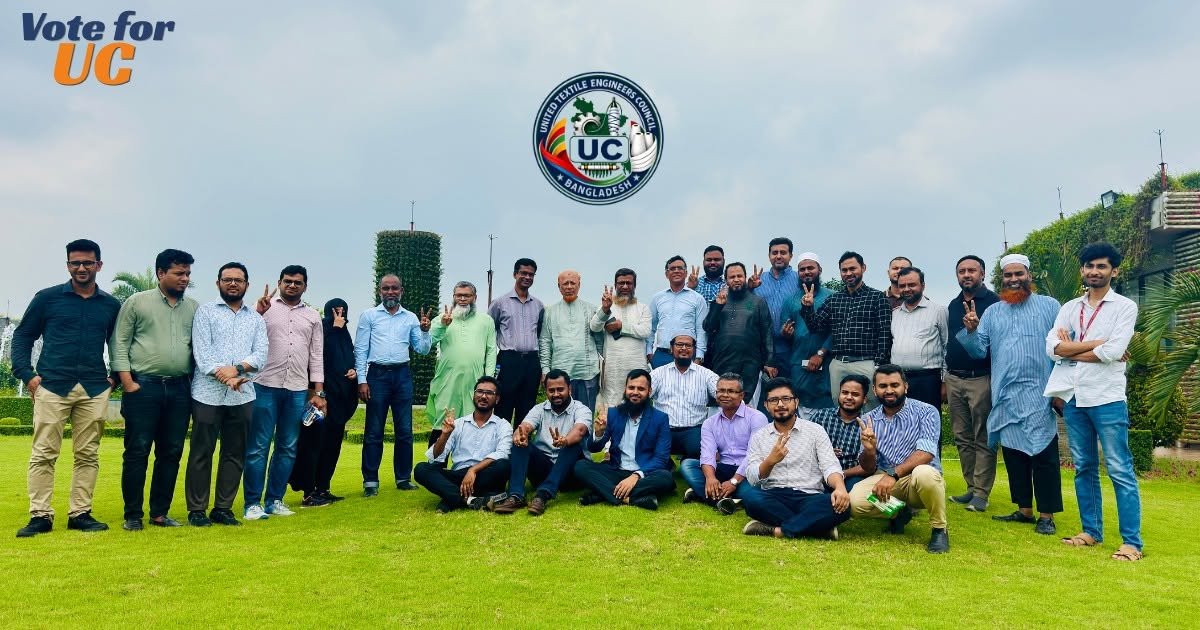
The United Council (UC) Panel has announced a comprehensive 14-point manifesto for the Institution of Textile Engineers and Technologists (ITET) Election 2026, pledging to strengthen professional rights, welfare, employment opportunities and institutional development for textile engineers across Bangladesh.
The manifesto, released under the banner of the United Textile Engineers Council, outlines a vision of building a modern, transparent, digitally enabled and member-focused ITET that promotes professional advancement, economic security, social welfare and global recognition for textile engineers.
A key commitment of the panel is to pursue the introduction of a dedicated Textile BCS Cadre, aimed at creating greater representation of textile engineering professionals in public service. The panel also pledged to continue efforts to construct a permanent ITET headquarters in Uttara and seek additional land allocation for future expansion.
The manifesto places significant emphasis on social welfare and professional security. Proposed initiatives include affordable housing support, expanded healthcare services, health insurance facilities, emergency assistance mechanisms and the strengthening of the existing welfare fund to support members during illness, unemployment and other crises.
To enhance professional rights and workplace protections, the panel has proposed establishing a dedicated legal support cell to assist members facing discrimination, unfair termination or other employment-related challenges. It also aims to increase the representation and recognition of textile engineers at national policy-making levels.
Employment generation and career development feature prominently in the manifesto. The UC Panel has pledged to establish a career support cell, CV bank, job portal and career counselling services, alongside organizing regular job fairs and recruitment activities for textile engineers.
For students and young professionals, the manifesto proposes student memberships, internship opportunities, career guidance programmes, scholarships and research grants to help develop the next generation of textile engineering talent.
Recognising the need for innovation-driven growth, the panel has also committed to establishing a modern Textile Research Institute to facilitate technology transfer, industrial modernization and sustainable development within Bangladesh’s textile and apparel sector.
Other priorities include regular professional training, leadership development programmes, mentorship initiatives and specialized courses on compliance, sustainability and emerging technologies. The panel also plans to introduce a fully digital membership management system and online service platform to improve engagement and accessibility for members.
On the international front, the manifesto calls for stronger partnerships with global textile organizations, the formation of a Global Textile Engineer Network and expanded opportunities for overseas training, seminars and conferences.
The manifesto concludes with commitments to transparency, accountability and good governance, including regular publication of audited financial statements and greater member participation in organizational decision-making.
With the election approaching, the UC Panel said its agenda is designed to strengthen ITET’s institutional capacity while advancing the professional interests and long-term welfare of textile engineers in Bangladesh.