



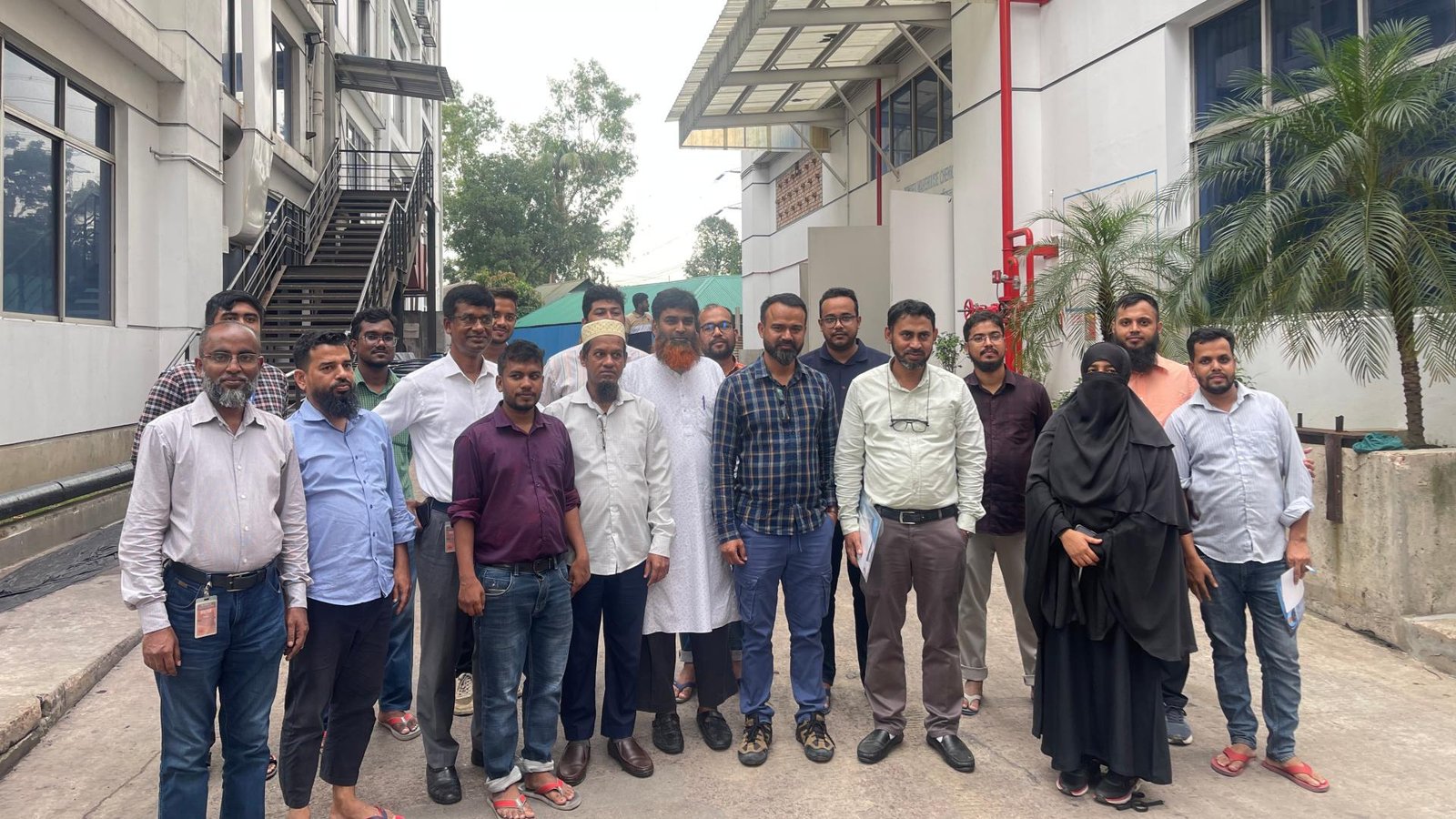
The United Council (UC) Panel intensified its outreach campaign ahead of the forthcoming Institution of Textile Engineers and Technologists (ITET) election by organizing an interactive discussion and election campaign program at GMS Textile, one of Bangladesh’s leading apparel manufacturing enterprises.
The event brought together a significant number of textile engineers, industry professionals, and ITET members, creating a constructive platform for dialogue on the future direction of the organization and the professional development of the country’s textile engineering community.
Representing the United Council Panel were Professor Dr. Engr. Emdad Sarker, candidate for Treasurer; Engr. Mahfizur Rahman, candidate for Secretary of Employment and Investment Affairs; Israt Jahan Lucky, candidate for Women Affairs Secretary; Engr. Shahriar Jinnah Biplob, candidate for Organizing Secretary; Engr. Md. Sakibur Rahman, candidate for Education and Literary Affairs Secretary; Engr. Zahirul Haque Khan, candidate for Executive Member; and Engr. Shankar Dayal Biswas, Executive Member.
The program commenced with a welcome address by Engr. Rashed Sarkar, Deputy General Manager of GMS Textile and a distinguished alumnus of Bangladesh University of Textiles (BUTEX), Batch-28. Addressing the gathering, he reflected on the evolution of ITET, highlighting both its achievements and challenges over the years.
Emphasizing the importance of institutional reform and effective leadership, he remarked that the textile engineering fraternity expects a more dynamic, accountable, and member-oriented ITET capable of addressing contemporary professional challenges while fostering greater unity among engineers.
He further expressed his confidence in the integrity, professionalism, and leadership capabilities of the candidates contesting under the United Council banner and extended his best wishes for their success in the upcoming election.Presenting the panel’s vision and strategic priorities, Professor Dr. Engr. Emdad Sarker delivered the keynote address. He underscored the necessity of strengthening ITET as an independent, professional, and service-oriented institution that genuinely represents the interests of textile engineers.
According to him, the United Council Panel has been formed with the objective of promoting transparency, professionalism, inclusiveness, and merit-based leadership within the organization. He noted that the evolving demands of the textile and apparel sector require a stronger institutional framework capable of supporting engineers through professional development initiatives, industry engagement, and member welfare programs.
“Our vision is to establish an ITET that remains free from undue influence and is guided by competence, integrity, and accountability. We believe the organization must serve as a unified platform that protects the professional interests of textile engineers and contributes meaningfully to the advancement of Bangladesh’s textile sector,” he stated.
The session also featured remarks from Engr. Muktadir Rahman, Deputy General Manager of GMS Textile, who highlighted several priority areas where members expect greater engagement from ITET. He stressed the need for enhanced welfare initiatives, particularly in healthcare support, emergency assistance mechanisms, and long-term housing-related facilities for members.
He called upon future leadership to formulate practical and sustainable programs that deliver measurable benefits to engineers while strengthening the institution’s relevance within the industry.
The interactive session witnessed active participation from textile professionals and BUTEX alumni employed at GMS Textile. Participants shared their perspectives on organizational development, member services, professional networking, and industry representation, while appreciating the opportunity to engage directly with the panel’s candidates.
The event concluded with a renewed commitment from the United Council Panel to work towards building a more transparent, inclusive, and professionally driven ITET that can effectively respond to the aspirations and challenges of Bangladesh’s textile engineering community.
As the ITET election approaches, such engagement initiatives continue to play a crucial role in fostering dialogue between candidates and members, while shaping discussions around the future leadership and strategic direction of one of the country’s most important professional bodies for textile engineers.