



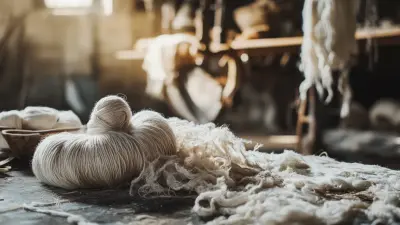
Australian Merino wool and Australian cotton were showcased together for the first time in Bangladesh, introducing local manufacturers to innovative wool-cotton blending technologies that could support the country’s transition toward higher-value and more sustainable apparel production.
The showcase took place during the Australian Natural Fiber Seminar in Dhaka, bringing together more than 150 representatives from spinning mills, knitting and weaving companies, garment manufacturers and exporters.
Organized by the Australian Trade and Investment Commission (Austrade) in collaboration with the Australian Cotton Shippers Association (ACSA), Wool Producers Australia (WPA) and The Woolmark Company, the event focused on expanding Bangladesh’s capabilities in premium textile manufacturing and export diversification.
A key highlight of the seminar was the presentation of technologies that enable Premium Australian Merino wool to be processed on conventional short-staple cotton spinning systems. Solutions such as eqwools™ allow manufacturers to produce wool-cotton blended yarns without investing in costly long-staple wool processing machinery, making the technology more accessible for Bangladeshi mills.
Industry experts demonstrated how combining Australian Merino wool with cotton can create fabrics that offer enhanced comfort, breathability, temperature regulation and durability while supporting sustainability goals through the use of natural fibers.
The initiative comes at a time when global apparel brands and retailers are increasingly seeking products with greater traceability, lower environmental impact and stronger sustainability credentials. As consumer demand shifts toward premium and responsibly sourced products, wool-cotton blends are emerging as an attractive option for manufacturers looking to move beyond traditional commodity-based apparel production.
Participants at the seminar discussed the potential for Bangladesh to leverage these innovations to diversify its export basket, enter higher-margin market segments and strengthen its position in the global textile and apparel value chain.
Industry stakeholders noted that adopting advanced fiber blending technologies could help local manufacturers develop differentiated products for international buyers while enhancing competitiveness in an increasingly sustainability-focused global market.
The seminar reflects growing collaboration between Australian natural fiber organizations and Bangladesh’s textile industry, creating new opportunities for knowledge exchange, technology transfer and product innovation aimed at supporting the next phase of growth in the country’s apparel sector.