



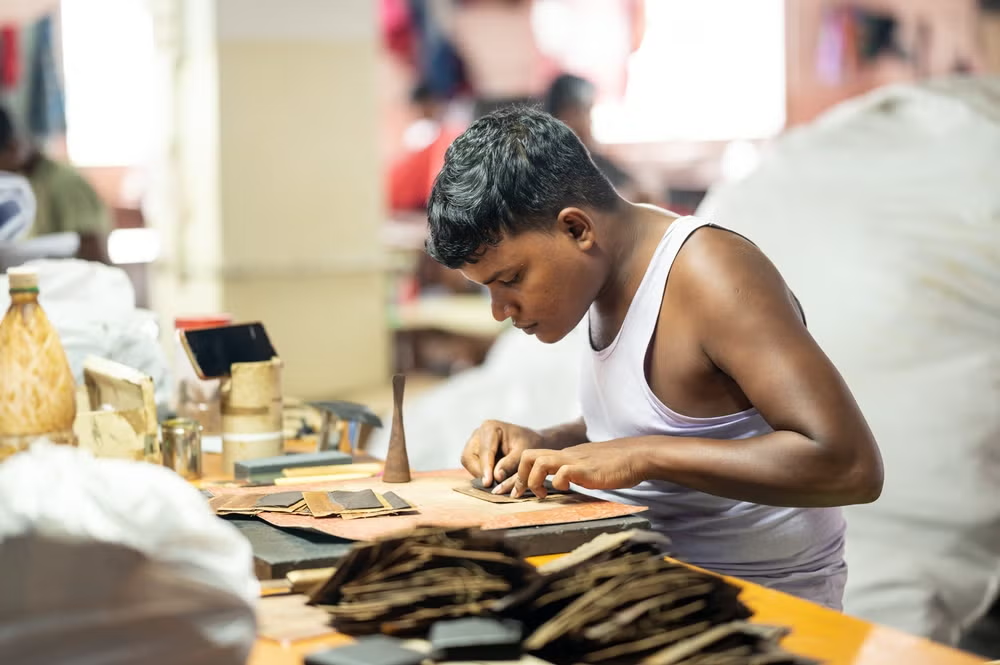
Bangladesh’s leather industry is facing mounting challenges that could weaken its position in global markets, with industry leaders and experts warning that policy shortcomings, environmental compliance issues and limited institutional support are eroding the sector’s competitiveness.
The concerns were raised during a webinar titled “Is the Future of Bangladesh’s Leather Industry Losing Its Momentum?” organized by the Power and Participation Research Centre (PPRC) on 6 June.
Participants noted that despite offering up to 80 percent value addition potential and contributing significantly to export earnings and employment, the leather sector continues to struggle with long-standing structural barriers.
Speaking at the event, Md Tipu Sultan, Chairman of the Bangladesh Finished Leather, Leathergoods and Footwear Exporters’ Association, said key environmental facilities promised during the relocation of tanneries from Hazaribagh to Savar’s Hemayetpur remain incomplete.
According to him, the lack of fully functional compliance infrastructure has negatively affected buyer confidence and reduced export opportunities for leather manufacturers, particularly smaller enterprises.
Nasir Khan, Chairman of Jennys Shoes Ltd, highlighted complex licensing procedures, tax-related challenges, limited value addition and ineffective incentive mechanisms as major obstacles to industry growth. He stressed that Bangladesh still lacks the policy framework required to compete effectively with leading leather-exporting countries such as Vietnam.
Meanwhile, Mustafizur Rahman, Distinguished Fellow at the Centre for Policy Dialogue, cautioned that Bangladesh could face additional trade barriers under the EU’s Carbon Border Adjustment Mechanism (CBAM) if exporters fail to comply with evolving environmental requirements.
Experts also emphasized the need to reduce leather waste, improve preservation practices and strengthen monitoring systems to enhance sustainability across the value chain.
Moderating the discussion, Hossain Zillur Rahman said future policy interventions must address environmental, economic and institutional challenges simultaneously to ensure the long-term sustainability and global competitiveness of Bangladesh’s leather industry.